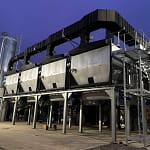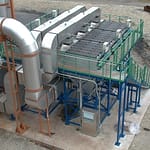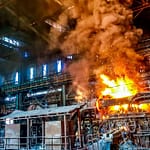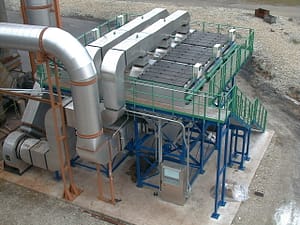




A fluidised bed reactor is a process vessel in which gas passes upward through a granular material, causing the particles to behave in a fluid-like state. In combustion applications, fuel is introduced into this fluidised bed to produce heat and generate a hot flue gas stream containing particulate and reaction products. Before discharge to atmosphere, this gas requires downstream cleaning including high-efficiency particulate filtration.
Fluidised bed combustion systems are used in a range of industrial and energy applications where reliable combustion and particulate control are required. Downstream hot gas filtration systems play an important role in removing fine particulate from these high-temperature gas streams.
What is a Fluidised Bed Reactor?
Fluidisation occurs when gas flowing upward through a granular material causes the particles to move freely and behave similarly to a liquid. This movement promotes mixing within the reactor and allows heat to be distributed throughout the bed.
A fluidised bed reactor is used in a range of industrial processes. In combustion systems, the technology is referred to as fluidised bed combustion (FBC). The term “fluidized bed reactor” is also commonly used in American English.
Fluidised bed combustion systems generate hot gas streams containing particulate that require downstream filtration before release to atmosphere.
How Fluidised Bed Combustion Works
The Bed Material
Fluidised bed systems use granular bed material within the reactor to support mixing and heat distribution during operation.
Fuel Injection and Combustion
Fuel is introduced into the fluidised bed where combustion takes place within the moving bed material. Air introduced into the system supports combustion and maintains fluidisation within the reactor.
Gas and Particle Discharge
During operation, hot flue gas exits the reactor carrying particulate and entrained material. Downstream gas cleaning and filtration systems are therefore required to remove particulate before discharge to atmosphere.
Further information is available on flue gas treatment.
Types of Fluidised Bed Systems
Bubbling Fluidised Bed (BFB)
Bubbling fluidised bed systems operate with gas flow sufficient to fluidise the bed material while the majority of material remains within the reactor vessel. These systems are used in industrial combustion applications requiring controlled combustion conditions and downstream particulate filtration.
Circulating Fluidised Bed (CFB)
Circulating fluidised bed systems operate with higher gas flow rates, resulting in greater entrainment of material within the gas stream. These systems require downstream particulate separation and filtration to remove entrained particulate from the flue gas.
Fuels and Applications
Fluidised bed combustion systems are used across a range of industrial and energy applications including biomass combustion, waste treatment, and industrial process heating.
Applications involving renewable energy filtration and energy-from-waste processes may involve fluidised bed combustion systems operating with downstream high-temperature filtration.
Emissions from Fluidised Bed Combustion: The Filtration Challenge
Particulate Carryover
Fluidised bed combustion systems generate particulate that remains within the flue gas stream after combustion. Effective downstream filtration is therefore required to prevent particulate emissions and protect downstream equipment.
Temperature Considerations
High-temperature gas streams generated during fluidised bed combustion require filtration systems capable of operating reliably under elevated temperature conditions.
Mineral filter elements can operate at temperatures up to approximately 750°C, while ceramic filter elements can operate at temperatures up to approximately 1000°C, depending on application requirements and operating conditions.
Acid Gas and Pollutant Compounds
Additional gas treatment processes may be applied where acid gas removal is required. Downstream filtration systems capture particulate and reacted material generated during dry gas cleaning processes.
Why High-Temperature Filtration is Critical After Fluidised Bed Reactors
High-temperature filtration forms an essential downstream stage in fluidised bed combustion systems. Filtration systems capture fine particulate and process-derived material before discharge to atmosphere.
Where operating temperatures exceed the capability of conventional bag-type filters, high-temperature ceramic or mineral filtration elements may be required. Glosfume states that ceramic filter media can withstand temperatures up to 1000°C and that mineral elements can operate up to approximately 750°C.
Glosfume specialises in high-temperature particulate filtration systems for demanding industrial applications. Filter media selection depends on process temperature, particulate loading, gas composition, and operating conditions.
Further information is available on ceramic filters for biomass gasification.
Frequently Asked Questions
What is the difference between bubbling and circulating fluidised bed?
Bubbling fluidised bed systems operate with lower gas flow rates where the majority of the bed material remains within the reactor. Circulating fluidised bed systems operate with higher gas flow rates that entrain greater quantities of material within the gas stream. Both systems generate particulate-containing flue gas requiring downstream filtration.
What fuels can be used in fluidised bed reactors?
Fluidised bed combustion systems are used across a range of industrial combustion and waste treatment applications. Fuel type and operating conditions depend on the specific process and plant design.
Why is filtration needed after a fluidised bed reactor?
Hot gas streams leaving a fluidised bed combustion system contain fine particulate and process-derived material that must be removed before discharge to atmosphere. Downstream filtration systems provide particulate removal and may also capture material associated with dry gas treatment processes.
What temperature does flue gas reach after a fluidised bed combustor?
Glosfume does not specify standard operating temperatures for fluidised bed combustors. However, it states that ceramic filtration media can withstand temperatures up to 1000°C and mineral elements can operate up to approximately 750°C depending on application requirements.
What is the difference between grate firing and fluidised bed combustion?
Grate firing and fluidised bed combustion are different combustion approaches used in industrial thermal processes. Both systems generate hot flue gas streams containing particulate that require downstream filtration before discharge to atmosphere. Further information is available in our companion article on grate firing.
Talk to Glosfume About Filtration for Your FBC Installation
If you are specifying filtration for a fluidised bed combustion application, Glosfume can assist with filter media selection and downstream high-temperature filtration design.
Glosfume states that the company had completed more than 1000 installations worldwide across a range of industrial filtration applications.
To discuss your application, visit the contact page.