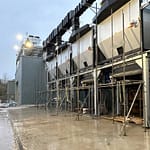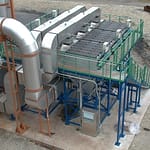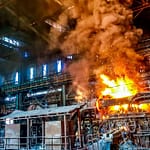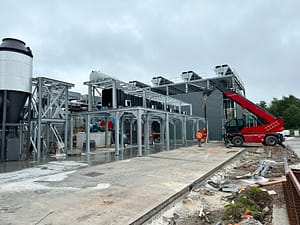




Grate firing is a solid-fuel combustion process used in industrial boiler, biomass, and waste combustion applications. These systems generate hot gas streams containing particulate, acid gases, dioxins, and other regulated pollutants that require downstream flue gas treatment before discharge to atmosphere.
Glosfume supplies downstream hot gas filtration systems for demanding combustion applications, including biomass boilers, municipal waste incineration, waste-to-energy plants, and thermal oxidisers. The filtration stage is responsible for removing fine particulate and material associated with dry gas treatment processes.
Emissions from Grate-Fired and Solid-Fuel Combustion Systems
Combustion systems handling biomass, waste, and industrial fuels can produce high-temperature gases containing fine particulate and gaseous pollutants. Glosfume identifies particulate, acid gases, volatile organic compounds, carbon monoxide, and dioxins as key regulated pollutants in waste combustion applications.
Particulate emissions are often extremely fine. Glosfume notes that hot gas emissions frequently contain sub-micron particles, which are difficult to capture using conventional filtration systems.
Why Conventional Bag Filters Struggle
Conventional bag filters are limited in high-temperature applications. Glosfume states that hot waste gases from industrial processes often have temperatures above 400°C, which can cause bag-type filters to fail within a short time.
Cooling gas before filtration can add system complexity and may introduce further operational problems. In combustion applications where sparks or hot particulate are present, combustible filter media can also increase fire risk.
Hot Gas Filtration for Combustion Emissions
Ceramic and mineral hot gas filtration systems provide a dry filtration route for combustion gas streams. Glosfume filter media is designed to remove sub-micron particulate while operating at elevated temperatures unsuitable for conventional fabric filters.
Ceramic filter elements can withstand temperatures up to approximately 1000°C, while mineral filter elements can operate up to approximately 750°C depending on application requirements. These temperature capabilities allow filtration to be applied in high-temperature process environments where bag filters may not be suitable.
Dry Scrubbing and Downstream Filtration
Glosfume references dry scrubbing processes using sodium bicarbonate, lime, and activated carbon injection. These processes are used for acid gas and dioxin removal in combustion gas treatment applications.
After injection, reacted and unreacted material must be captured by the downstream filtration system. The filter stage therefore supports both particulate removal and the collection of material associated with dry gas treatment processes.
Applications in Biomass and Waste Combustion
Glosfume identifies biomass wood-fired boilers, municipal waste incineration, waste-to-energy plants, thermal oxidisers, and industrial waste combustion among the applications for hot gas filtration. These sectors all involve demanding particulate control requirements and, in many cases, acid gas or dioxin treatment.
In biomass applications, Glosfume notes that burning biomass creates high levels of PM10 and PM2.5, including sub-micron particles not visible to the naked eye. Glosfume developed ceramic filter elements with a micro-porous surface finish to trap these fine particles.
For relevant applications, see Glosfume’s energy-from-waste filtration and biomass energy filtration pages.
Filtration Performance and System Benefits
Glosfume states that its filtration systems are highly efficient, with filtration efficiency up to 99.99%. It also states that emission levels are below 3 mg/m³, typically 1 mg/m³, depending on application and operating conditions.
Dry filtration allows collected material to be discharged as a dry powder rather than as liquid waste. This can simplify handling compared with wet treatment systems and avoids the generation of liquid by-products.
Glosfume filtration systems are also described as non-flammable, which is important in combustion applications where sparks or hot particulate may be present in the gas stream.
Frequently Asked Questions
What is grate firing?
Grate firing is a solid-fuel combustion process used in boiler, biomass, and waste combustion applications. The combustion process generates hot flue gas containing particulate and regulated pollutants that require downstream gas cleaning. In filtration terms, the key issue is not the grate mechanism itself, but the need to remove fine particulate, dry scrubbing residues, and combustion-derived pollutants before discharge to atmosphere.
What emissions are produced by grate-fired systems?
Grate-fired and solid-fuel combustion systems can produce particulate matter, acid gases, volatile organic compounds, carbon monoxide, and dioxins, depending on the fuel and operating conditions. Glosfume references these pollutant classes in waste combustion applications and highlights the need for effective downstream filtration and gas treatment.
How are emissions from grate-fired plants controlled?
Emissions are controlled using downstream flue gas treatment systems. These may include dry scrubbing processes using sodium bicarbonate, lime, or activated carbon injection, followed by high-efficiency particulate filtration. Glosfume supplies the downstream hot gas filtration stage, which captures fine particulate and collected dry treatment residues.
Why is filtration required after combustion?
Filtration is required because combustion gas streams contain fine particulate, including sub-micron particles that can pass through less efficient separation systems. Downstream filtration prevents particulate release to atmosphere, supports emissions compliance, and protects downstream equipment from fouling and wear.
Can ceramic filters be used in high-temperature combustion applications?
Yes. Glosfume ceramic filter media can withstand temperatures up to approximately 1000°C, while mineral elements can operate up to approximately 750°C depending on application requirements. These filter media are used where elevated temperatures make conventional bag-type filters unsuitable.
Talk to Glosfume About Filtration for Combustion Emissions
If you are reviewing the filtration stage of a biomass, waste combustion, or industrial boiler installation, Glosfume can advise on suitable ceramic or mineral filter configurations for your gas temperature and particulate loading.
Glosfume states that the company had completed more than 1000 installations worldwide across a range of industrial filtration applications.
To discuss your application, visit the contact page.