



Catalyst production is a precision-driven industry. Whether manufacturing metal oxides, zeolites, or supported noble metal catalysts, these processes often generate hot gas streams laden with valuable particulate matter. Capturing this particulate is essential not just for environmental compliance, but also to maximise yield and reduce waste.
Traditional filtration systems often fall short under high-temperature conditions or when faced with sub-micron catalyst dusts. This is where ceramic filtration provides a clear advantage — enabling fine particulate capture, product recovery, and emissions control in one compact system. This article outlines the role of ceramic filters in protecting catalyst plant performance.
The Challenge: Emissions and Product Loss
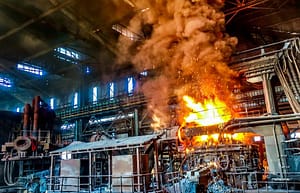
Hot gas streams in catalyst plants — particularly during calcination, activation, or spray drying — often contain high concentrations of PM10 and PM2.5. These particles may consist of valuable metals such as vanadium, cobalt, molybdenum, or alumina-based supports. If these particulates are not efficiently captured, they exit the stack as emissions or settle in ductwork, creating loss and contamination risks.
Aside from yield concerns, escaping particulate matter places catalyst manufacturers at risk of breaching air quality regulations, especially where ultrafine particles are concerned. Meeting emission thresholds often below 5 mg/m³ requires high-efficiency filtration — and fabric bags struggle with heat, chemical compatibility, and sub-micron capture.
Why Ceramic Filters Fit the Application
Ceramic filter elements offer several key benefits in catalyst manufacturing:
- Withstand operating temperatures up to 1000°C
- Non-combustible and chemically inert for corrosive gas streams
- Capture PM2.5 and smaller with ≥99.99% efficiency
- Allow dry, backpulse cleaning — no water, no shutdown
- Enable integration with product recovery systems
Unlike fabric filters, ceramic elements maintain their structure and efficiency under continuous thermal load. They’re ideal for processes where emission compliance and product quality must be tightly controlled over long campaigns.
PM2.5 Capture and Gas Cleanliness
In many catalyst production lines, downstream equipment is sensitive to fine particulate. Heat exchangers, catalytic reactors, or packaging systems require particulate-free gas to maintain efficiency and prevent fouling. Ceramic filters provide depth and surface filtration, ensuring that even ultrafine catalyst particles are removed.
With integrated pulse-jet cleaning, dust is collected on the element surface and discharged via hopper for reuse or packaging. This prevents buildup, stabilises pressure drop, and avoids loss of product to emissions. In some cases, this recovered powder is directly returned to blending or milling steps — increasing overall process yield.
Case Study: Oxide Catalyst Line Retrofit
A European catalyst manufacturer operating a vanadium oxide calcination process was experiencing high maintenance on a baghouse system, with emissions frequently exceeding 10 mg/m³. The filter bags required replacement every six months due to heat degradation, and product losses were significant.
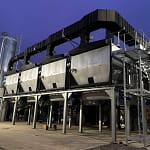
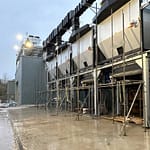
Glosfume designed a ceramic filtration system to replace the baghouse. Key specifications:
- Gas volume: 6,500 m³/h at 780°C
- Dust loading: 3.5 g/Nm³, fine metal oxide particles
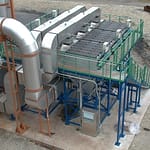
- Filtration system: 36 ceramic elements, pulse jet cleaning, mild steel housing with insulation
- Dust recovery: fully enclosed, food-grade stainless steel discharge
Post-installation results included:
- PM emissions < 1 mg/m³ consistently
- 90% recovery of fine oxide product for reuse
- Extended filter life (24+ months without element change)
- No impact on plant throughput or drying time
This retrofit paid for itself within 18 months through reduced product loss and maintenance.
System Integration Considerations
Integrating ceramic filters into a catalyst plant requires careful consideration of gas flow, cleaning sequence, and material handling. Glosfume’s bespoke systems can be designed to suit fixed-bed, fluidised, or rotary kilns, as well as spray drying towers and thermal activation lines.
Key features include:
- Insulated filter housings with minimal footprint
- Automated pulse logic to maintain constant pressure drop
- Enclosed hopper and dust transport systems to preserve product purity
- Modular filter banks to handle flows from 1,000 to 20,000 m³/h
In systems where multiple products are processed, the ceramic filter can be cleaned between campaigns and the recovered dust handled accordingly. The result is higher recovery, reduced contamination risk, and better overall plant efficiency.
Catalyst manufacturing demands precise control over emissions, yield, and process cleanliness. Ceramic filtration meets all three — offering high-temperature, high-efficiency dust capture while protecting product and equipment downstream.
Whether retrofitting an ageing baghouse or designing a new catalyst line, ceramic filters provide long-term performance with minimal maintenance. For operations focused on fine particulate control, product recovery, and environmental compliance, ceramic filtration is not just an upgrade — it’s an essential part of the process.