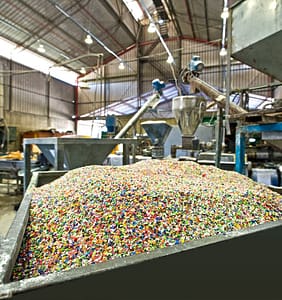




As the global steel industry moves toward net-zero targets, the traditional image of steelmaking — dominated by coke, blast furnaces, and towering emissions stacks — is being replaced. In its place is a new generation of clean, low-carbon, and hydrogen-based steel production processes. These developments present both opportunity and complexity for filtration system designers.
Whether it’s direct reduced iron (DRI), electric arc furnace (EAF) upgrades, or smelting using hydrogen and syngas, these processes generate hot gas streams that still require robust filtration. Particulate matter (PM), condensed tars, or reactive dusts must be removed efficiently to protect equipment and meet tightening emissions limits — all without compromising thermal efficiency.
This article explores how high-temperature ceramic filters are supporting the green transition in metalmaking, offering durable, dry filtration that integrates with decarbonised smelting systems and future fuels.
Where Filtration Fits in Hydrogen-Based Smelting
Emerging steelmaking processes such as hydrogen-based DRI still produce hot gas streams rich in PM2.5, metallic dusts, and potentially unreacted fuel. These gases must be filtered before being reused, cooled, or released. Conventional fabric filters often fail at the high temperatures typical in H2-DRI and syngas-based routes.
Filtration is also required downstream of off-gas heat recovery or when coupling DRI with carbon capture systems. Poor filtration at this stage can introduce dust to sensitive catalytic or separation stages, leading to fouling, efficiency loss, or maintenance shutdowns.
Reliable, continuous filtration at temperatures up to 900°C — without quenching or introducing moisture — becomes a core enabling technology for these decarbonised pathways.
Ceramic vs Fabric Filters in High-Temperature Metallurgy
Ceramic filtration systems provide high-efficiency dust removal (>99.99%) while operating in the most demanding thermal conditions. Unlike fabric bag filters, they do not degrade above 300°C, and they are resistant to spark ignition, corrosive dusts, and thermal cycling.
Steel processes are often highly variable — from thermal load to gas chemistry — and ceramic elements are robust enough to manage these fluctuations. Pulse-jet backcleaning ensures continuous operation even under fluctuating particulate loads, making them suitable for batch processes, pilot lines, or fluctuating fuel mixes.
In comparison, baghouses used in secondary metallurgy or coke-based systems typically require cooling or quenching, which introduces water management and condensation risks — issues avoided entirely with dry ceramic filtration.
Gas Composition and PM in Steel Off-Gases
Off-gases from green steel processes may contain metal oxides (Fe, Mn, Si), carbon particles, and residual reductants depending on the fuel type. When using H2 or syngas, water vapour content can be high, and some systems also carry unburned hydrocarbons or carbon black.
Capturing this particulate matter is essential not only for regulatory compliance but for process safety and heat exchanger efficiency. Ceramic filters capture PM2.5 and sub-micron dusts at the filter surface, where they can be backpulsed off into a hopper without interrupting gas flow.
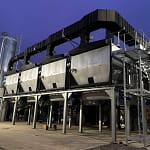
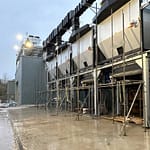
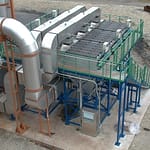
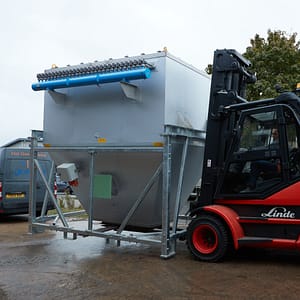
Well-designed custom filter housings maintain consistent gas distribution and allow modular scaling, from pilot to full-scale production plants. Key design features include high-grade insulation, corrosion-resistant housings, and adaptive pulse logic to suit variable gas conditions.
Case Study: Ceramic Filters in an Experimental DRI Pilot
At a European hydrogen-DRI demonstration plant, ceramic filters were used to treat off-gases at 750°C containing fine iron oxide and carbon particles. The system processed 4,000 m³/h of gas from the reactor and was designed to protect heat exchangers and gas-cleaning stages downstream.
The ceramic filter unit featured 24 vertical elements housed in a high-alloy steel vessel with high-temperature gaskets and automated backpulsing. Over 18 months of pilot-scale testing:
- PM emissions remained consistently below 1 mg/m³
- Pressure drop held between 90–110 mbar
- No filter elements required replacement
- Compressed air demand was minimal with DP-triggered cleaning
The successful integration of dry ceramic filtration enabled continuous operation of the DRI pilot and informed scale-up planning for full-scale installations.
Designing for Future Fuel Sources
As steelmakers move toward hydrogen, ammonia, or bio-derived fuels, filtration systems must handle changing combustion products and dust chemistries. Ceramic filters can operate across a range of oxidation conditions and remain stable even in reactive or reducing gas atmospheres.
This adaptability makes them well suited for hybrid facilities using multiple input fuels or operating transitional systems alongside legacy infrastructure. Their resistance to thermal cycling is also valuable in systems with frequent stop-start operation or rapid ramping typical of integrated renewables.
Ceramic filters also reduce the need for downstream water treatment or chemical scrubbing — which aligns well with overall process decarbonisation strategies and efforts to reduce industrial water use.
As low-carbon steelmaking matures, hot gas filtration will remain a critical enabler of process stability and environmental compliance. Ceramic filters offer a proven solution for the challenging conditions associated with hydrogen, syngas, and renewable-fuel-based metallurgical processes.
By providing high-efficiency dry filtration above 700°C, ceramic systems protect downstream assets, simplify system design, and support the transition to cleaner metalmaking. Whether applied to pilot-scale trials or scaled-up commercial plants, ceramic filtration continues to prove its value as part of the green steel toolkit.