

Glosfume Site Loader
Glosfume metals and mining

At Glosfume, we excel in crafting solutions that eliminate the emissions challenges posed by the metal and mining industry’s growing restrictions

The global metals and mining industry is one of the key foundations of society helping form the world we live in. Therefore, it is no surprise that this industry is expected to grow from £5746.07 billion in 2022 to £7863.67 billion by 2026 at a compound annual growth rate of 9.2%. This growth is being driven predominantly by the advancements in rare earth metals that are critical for the transition to net zero.

At Glosfume we pride ourselves on the ability to produce and provide air pollution solutions to the mining and metals industry to ensure that the ever increasing restrictions for emissions associated with the industry are no longer a headache. Removing the stigma of the industry being one of the biggest sources of global air pollution. Glosfume gas filtration systems are situated globally in a range of applications for the metals and mining industry. Specialising in the removal and reduction of sub-micron particles, acid gases, NOx and dioxins/furans. Glosfume is able to ensure all operations are creating “A breath of fresh air”.

Metals and Mining - At Glosfume, we excel in crafting solutions that eliminate the emissions challenges posed by the industry’s growing restrictions

Key challenges faced by the metals and mining sector

Both powerful and compact, our filters are globally recognised for their defining features. Discover how Glosfume is leading the charge for filtration in metal working and the mining industry

Continuous filtration

Continuous filtration of hot gases up to 750°C in temperature under vacuum or pressure.

Disposal costs

Dry operating conditions of the filter enables collected material to be discharged as dry bulk powders that are able to be used as feedstock. Reducing costly disposal of liquid by products associated with other filter methods.

Scalable

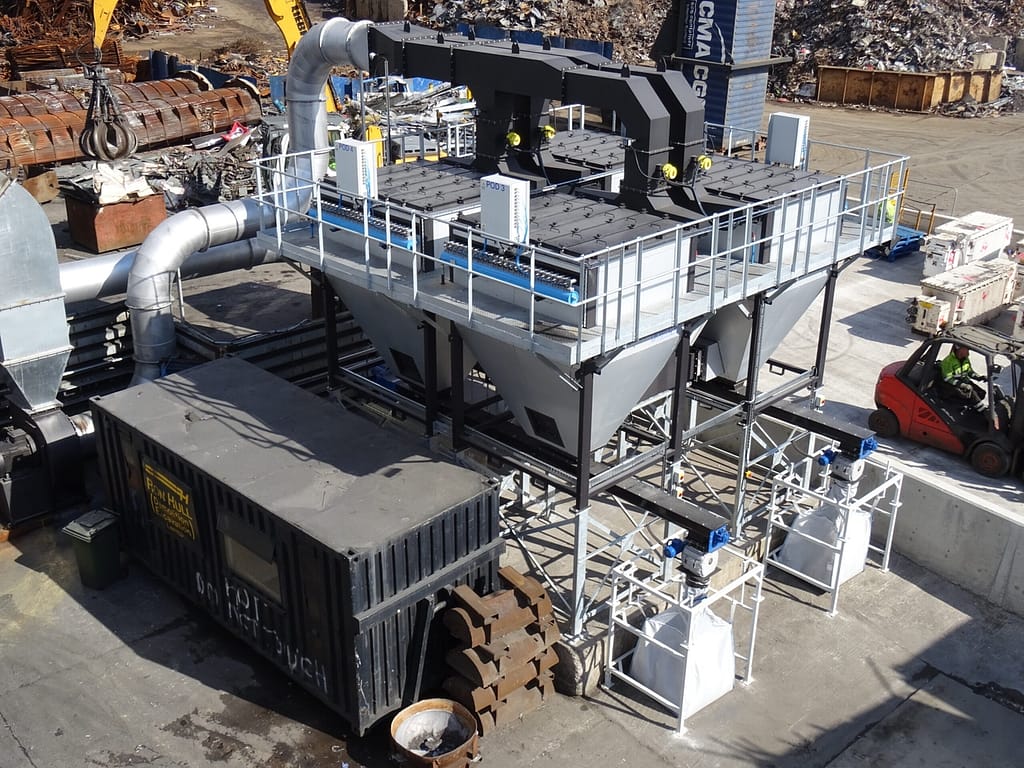
Pod system allows easy expansion in multiples of 1 to 32 pods

Fires and operational temps

Glosfume filters, unlike other systems in the mining and metal working industry, ​are not vulnerable to fires caused by sparks. This allows the system to operate without the need for spark suppression and temperature reduction.

Future proof filters

Typical particulate emission levels meet both current and future requirements of carbon capture technology

Dry scrubbing process

Our additional dry scrubbing process removes acid gases and dioxins from the gas stream.

At Glosfume, we excel in crafting solutions that eliminate the emissions challenges posed by the industry’s growing restrictions

Why ceramic hot gas filtration?

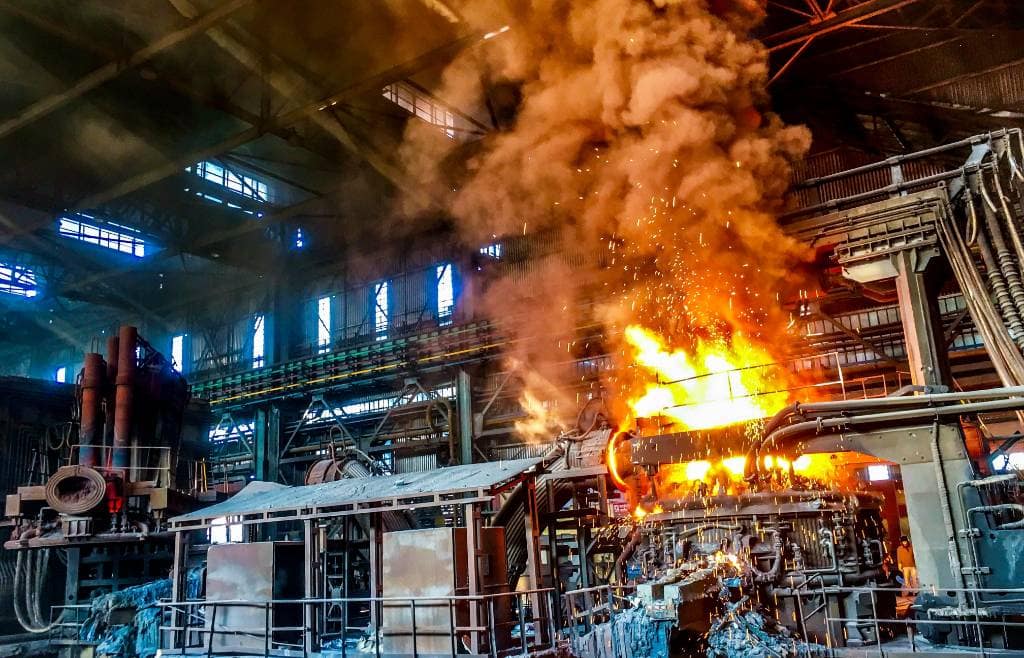
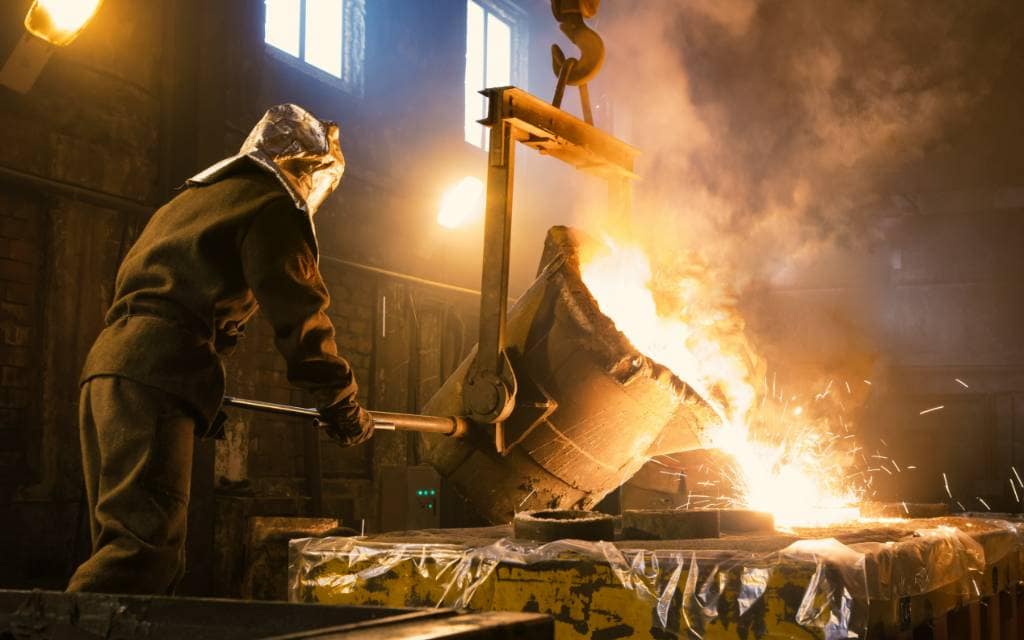
High-temperature processes are central to the metals and mining sector, particularly in aluminium smelting processes and secondary metal recovery. These operations generate hot, particulate-laden gases that must be treated reliably and safely.

Conventional bag filters struggle in these environments. Fabric media typically fail above 250–300°C, require gas cooling, and remain vulnerable to sparks and carbon carryover. Wet systems remove some thermal constraints but introduce wastewater, corrosion, and added operational complexity.

Ceramic hot gas filtration provides a proven reliable alternative. By operating directly at process temperature — up to 750°C, with capability to 1000°C — ceramic elements enable stable, dry, sub-micron filtration without fire risk or liquid waste. For operators evaluating aluminium filtration or broader filtration in metal working, this means fewer failure points and greater long-term reliability.

Conventional Failure Modes vs Ceramic Performance
Conventional Systems Ceramic Hot Gas Filtration
Fabric degradation above 250–300°C Continuous operation up to 750°C (up to 1000°C capability)
Fire risk from sparks and hot carbon Non-combustible ceramic filter media
Gas cooling required before filtration Direct high-temperature filtration
Wet scrubbers create liquid waste streams Fully dry operation with bulk powder discharge
Frequent bag replacement and operational downtime Proven long-term reliability in harsh environments

Technical Capabilities

When assessing filtration in metal working or aluminium smelting processes, decisions are typically based on defined performance criteria rather than broad claims. The following technical capabilities outline the core specification of Glosfume ceramic hot gas filtration systems.

Operating Temperature

Designed for continuous operation up to 750°C, with capability extending to 1000°C where required. This enables direct hot gas filtration without cooling stages.

Particulate Removal

Engineered for sub-micron particle capture, supporting strict emissions requirements across the metal working industry filtration sector.

System Scalability

Modular pod-based design allowing expansion from 1 to 32 pods, enabling capacity growth in line with plant development.

Installed Base

More than 2,000 filters installed globally across metals and mining applications.

Global Deployment

Operational systems installed across 7 continents, demonstrating adaptability to varied process conditions and regulatory environments.

Industry Experience

Over 30 years of specialist expertise in high-temperature gas filtration within the mining metal filtration market.

Applications in Metals & Mining

FAQ

A high temperature gas filter is a filtration system designed to remove particulate from hot process gas streams generated during thermal metal operations such as aluminium smelting processes, roasting, and secondary smelting. These systems operate at elevated temperatures where conventional fabric media would degrade. Key technical considerations include operating temperature, particle size distribution (particularly sub-micron fractions), gas chemistry, and corrosion potential. By filtering directly at source temperature, ceramic systems reduce the need for quenching and ductwork, improving thermal efficiency and lowering operational downtime while maintaining emissions compliance.

Ceramic filtration is a high-temperature alternative to fabric bag filters that eliminates common thermal failure modes. Bag filters typically operate below 250–300°C and require gas cooling, which introduces condensation risk and additional energy demand. They are also vulnerable to spark ignition and fabric degradation. Ceramic elements operate continuously up to 750°C, with capability to 1000°C, using non-combustible media and surface filtration principles. This improves system reliability, reduces maintenance frequency, and minimises unplanned shutdowns in demanding metal working industry filtration applications.

Yes, ceramic hot gas filters are engineered to remove sub-micron particles from smelting fumes through high-efficiency surface filtration. In aluminium filtration and other smelting processes, fine alumina, carbon, and metallic oxides often fall below 1 micron in diameter. These particles are critical from both a regulatory and air quality standpoint. Ceramic elements capture this fraction consistently, supporting particulate emissions compliance and reducing visible stack emissions. Reliable sub-micron removal also protects downstream heat exchangers and monitoring equipment, improving operational stability and reducing maintenance interventions.

Dry filtration is a process that removes particulate without introducing water into the gas stream. In metals and mining applications, wet scrubbers generate liquid effluent, sludge, and corrosion risks that increase treatment complexity and disposal costs. Ceramic dry filtration discharges collected material as bulk powder, which in some cases can be reused as feedstock. This reduces secondary waste handling and simplifies plant infrastructure. Operationally, dry systems improve reliability, reduce corrosion-related maintenance, and support lower overall OPEX compared to wet alternatives.

High disposal costs in metal filtration systems are primarily driven by dust loading, hazardous constituents, and media replacement frequency. Wet systems compound this by generating contaminated liquid by-products that require treatment and regulated discharge. Fabric filters may also require frequent bag changes, increasing waste volume and labour costs. In high-temperature metal processing, ceramic systems reduce these pressures by operating dry and producing stable bulk powders. This improves handling efficiency, lowers disposal frequency, and contributes to reduced lifecycle operating costs.

Spark suppression is a fire mitigation method used to protect combustible filter media in spark-prone processes. In conventional baghouses, spark detection and suppression systems are often necessary to prevent fabric ignition. Ceramic hot gas filtration uses non-combustible filter elements, eliminating the primary ignition risk within the filter housing. While upstream spark management may still be required as part of overall plant safety strategy, ceramic systems remove the need for suppression to protect the filtration media itself, improving safety margins and reducing associated maintenance costs.

Modular filtration systems scale by adding independent filtration pods without redesigning the entire installation. Ceramic systems utilise a pod architecture expandable from 1 to 32 pods, allowing capacity increases as production grows. This is particularly relevant in aluminium smelting processes and expanding metal working facilities where throughput may increase over time. Modular expansion reduces capital disruption, shortens installation time, and supports phased investment. Operationally, this approach maintains compliance while minimising downtime during plant upgrades.

Metals and mining case studies

Glosfume Site Loader

Talk to us about gas filteration for the metals and mining industry

Glosfume offers self-cleaning, high-efficiency metal finishing air filtration systems​ that can withstand up to 1000°C of heat. We have installed over 2,000 filters covering all seven continents over the last three decades, a feat that has positioned Glosfume as a global market leader.

We pride ourselves on our cost-effective pricing, thanks to our in-house approach to designing and manufacturing. With Glosfume, you will receive high-quality bespoke solutions at a competitive price.

Our award-winning hot gas filtration systems can be also tailored to the unique specifications of your application, so get in touch to discuss your requirements using the contact form

Talk to us now

+44 (0)1242 609 111

Pick up the phone and speak to one of the specialist Glosfume team today.

WhatsApp

Time not on your side? Message us on WhatsApp and we’ll get back to you.

Name(Required)