



Fabric bag filters have long been the workhorse of industrial dust collection. From cement plants to biomass boilers, baghouses are widespread due to their relatively low cost and ease of installation. But as emissions regulations tighten and processes grow hotter and more complex, the limitations of bag filters are becoming harder to ignore.
At certain temperature thresholds, or in applications with fire risk, corrosive gases, or sub-micron particulate, fabric filters struggle to deliver long-term performance. Ceramic filtration offers a proven, high-efficiency alternative — capable of capturing PM2.5, operating up to 1000°C, and eliminating issues associated with fabric degradation or combustion.
Where Bag Filters Struggle
Despite their prevalence, bag filters have several well-known challenges:
- Temperature Limits: Most fabric bags degrade above 250–280°C, requiring process gas cooling.
- Combustibility: Filters can ignite when exposed to sparks or carbonaceous dusts.
- Chemical Degradation: Acid gases and oxidisers shorten bag life.
- Fibre Shedding: Fabric filters can release particles back into the airstream.
- Maintenance Downtime: Frequent bag changes and inspections are needed in harsh environments.
For operators facing these issues, ceramic filters provide a more robust long-term solution.
Why Ceramic Filters Are an Upgrade
Glosfume ceramic filter elements are designed for dry, high-temperature, and high-integrity filtration. Unlike fabric filters, they are:
- Non-combustible: No fire risk from sparks or glowing dust
- Thermally stable: Operate continuously up to 1000°C
- Chemically resistant: Handle acid gases, solvents, and corrosives
- Highly efficient: ≥99.99% PM2.5 removal
- Self-cleaning: Pulse jet cleaning maintains performance
These properties make ceramic filters especially well-suited for waste-to-energy, pyrolysis, metals, and incineration processes — or anywhere bag life is compromised by heat or chemistry.
Side-by-Side: Baghouse vs Ceramic Filter Systems
| Feature | Bag Filters | Ceramic Filters |
|---|---|---|
| Operating Temp | Up to 260°C (typical) | Up to 1000°C |
| PM2.5 Efficiency | 96–99% | ≥99.99% |
| Fire Risk | High (combustible) | None (non-combustible) |
| Maintenance | Bag change every 6–12 months | Element life 2–3+ years |
| Chemical Resistance | Limited (degradation common) | Excellent (acid gas tolerant) |
The long-term cost of ownership often favours ceramic systems once maintenance, downtime, and energy savings are factored in.
Case Study: Upgrading Filter System for Waste-Derived Fuel Line
A UK-based cement manufacturer using waste-derived fuel (WDF) encountered frequent bag failures due to sparks, unburned carbon, and HCl carryover in the off-gas. The bag filters required changeouts every six months, and emission excursions were becoming more frequent.
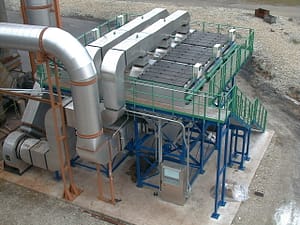
Glosfume installed a ceramic filtration system rated for 12,000 m³/h at 850°C. The system included:
- 96 ceramic elements in modular housing
- Pulse jet cleaning with remote control panel
- Dry sorbent injection for acid gas removal
- DP monitoring with emissions sample ports
Post-installation results:
- Dust emissions < 1 mg/m³ (previously 6–9 mg/m³)
- No filter replacements required in 24 months
- Energy savings from avoiding gas cooling
- Improved emissions reporting and plant uptime
Planning a Retrofit or Upgrade
Upgrading to ceramic filtration doesn’t mean redesigning your entire process. In many cases, ceramic housings can be fitted into existing filter footprints or adjacent locations. Key steps include:
- Assessing current temperature, dust load, and gas composition
- Sizing ceramic element count and housing volume
- Designing pulse cleaning, air supply, and discharge handling
- Evaluating integration with sorbents or catalysts if VOCs or acid gases are present
- Calculating OPEX savings from longer element life and no water usage
Most ceramic systems offer modular expansion and easy maintenance access, reducing lifecycle costs and supporting future emission compliance upgrades.
Conclusion
Bag filters have served industry well for decades, but in many high-demand applications, they are no longer the optimal choice. Ceramic filtration systems offer significant advantages in temperature tolerance, fire safety, emissions performance, and maintenance reduction.
For engineers facing chronic bag failures, tightening regulations, or increasing downtime, now is the time to explore the upgrade path to ceramic technology — a solution already proven in some of the world’s most demanding filtration environments.