



Biomass gasification and pyrolysis are central to many low-carbon and renewable energy strategies. These processes convert wood chips, agricultural residues, or organic waste into a combustible gas — or syngas — that can be used for power generation, fuel synthesis, or heating. But producing a usable syngas stream depends heavily on filtration.
Hot gas filtration in biomass systems is particularly challenging. The gas carries a mixture of fine ash, char, and volatile tars that can foul engines, poison catalysts, and exceed emissions thresholds. Traditional filtration systems struggle with the combination of high temperatures, condensable vapours, and fluctuating dust loads.
Ceramic filters provide a robust, dry filtration solution for biomass processes — capturing PM2.5 and ash without quenching the gas or introducing moisture. Their ability to operate above 700°C makes them ideal for pre-engine or post-reactor filtration, where consistent syngas quality and system uptime are essential.
Filtration Needs in Biomass Gasification
Raw gas from biomass gasification contains fine carbon ash, unburned char particles, and condensable organic vapours. The gas is typically at temperatures between 500°C and 800°C, and the composition varies with feedstock, moisture content, and system configuration.
These contaminants present a two-fold problem. First, particulates damage downstream equipment — from heat exchangers to gas engines or turbines. Second, tars condense if the gas is cooled, creating blockages, corrosion, or process failure. Removing both solids and condensables at high temperature, without introducing water or chemical scrubbers, is key to a stable and efficient biomass system.
Traditional filtration methods, such as bag filters, cyclones, or wet scrubbers, each come with limitations. Fabric filters degrade rapidly above 250°C. Wet scrubbers create liquid effluent that requires treatment. Cyclones alone cannot remove fine PM2.5 or sticky tar-laden particles.
Ceramic Filters in Syngas Lines
Ceramic filtration offers a dry, high-temperature alternative. Using rigid filter elements made from sintered ceramic media, the system captures particulates on the filter surface while allowing hot gas to pass through. Collected solids are dislodged using backpulse cleaning — eliminating the need for liquid-based cleaning or temperature reduction.
Key advantages include:
- Continuous operation at up to 1000°C
- Filtration efficiencies exceeding 99.99%
- Capture of PM2.5, char, and ash in one unit
- No water use or effluent treatment required
- Compact footprint suitable for skid or containerised systems
These features make ceramic filters ideal for syngas polishing downstream of fluidised bed gasifiers, downdraft reactors, or torrefaction units. They also integrate well with biochar systems where emissions must be tightly controlled and process efficiency is a priority.
Managing Tar Condensation and Pre-Filtration
While ceramic filters are resistant to tar and condensables, the filtration system must be designed to manage gas conditions carefully. Pre-filtration using high-efficiency cyclones or drop-out boxes can reduce coarse dust and help regulate inlet temperature. Proper insulation of ductwork and filter housings is essential to avoid cold spots where tars might condense and foul the system.
In some systems, a catalytic stage or thermal cracking unit is installed upstream to reduce tar load before filtration. Alternatively, precise control of feedstock moisture, gas residence time, and oxygen input can minimise tar formation at the source.
Glosfume provides bespoke filtration systems with insulation, mounting frames, and temperature monitoring to maintain stability — especially in mobile or batch-operated biomass plants.
Verified Performance in Biomass Gasification
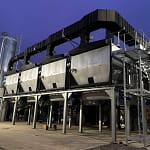
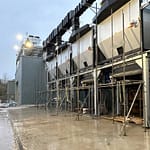
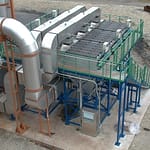
In a recent biomass project, a horizontal ceramic filtration unit was installed downstream of a gasifier handling wood chips and agricultural waste. The system processed 6,000 m³/h of gas at 720°C, with inlet dust loading of approximately 5 g/Nm³. Over 24 months of operation, the filter achieved the following:
- Particulate emissions < 1 mg/m³
- Stable pressure drop between 90–120 mbar
- Zero filter element failures
- Backpulse system required minimal compressed air
- Filtration housing integrated with CHP and flare systems
The plant operator avoided use of wet scrubbing and simplified site infrastructure. The consistent syngas quality allowed for stable CHP operation and increased availability of the system. Maintenance was reduced to occasional dust discharge and inspection.
Integration with Modular Systems
Ceramic filters are particularly well suited for integration with modular biomass systems — including combined heat and power (CHP), organic Rankine cycle (ORC), and advanced biochar production.
In compact plants, ceramic filtration enables the use of high-efficiency engines or turbines without fear of fouling. In ORC systems, clean gas prevents exchanger blockage and ensures predictable thermal profiles. For biochar producers, ceramic filters allow continuous operation while meeting emissions standards — all without a wet scrubber stage.
Skid-mounted filter housings with multiple ceramic elements can be tailored for flows from 500 m³/h to over 15,000 m³/h. With appropriate pulse control and dust discharge systems, the filters operate with minimal intervention — even in decentralised or remote energy projects.
Conclusion
As demand grows for cleaner, more flexible biomass energy systems, the role of hot gas filtration becomes more important than ever. Ceramic filters offer a dry, high-efficiency solution for removing particulates, protecting equipment, and ensuring stable syngas output — without adding water, scrubbers, or chemical treatment.
With verified performance in wood, waste, and agricultural feedstock gasifiers, ceramic filtration is now a mainstream choice for engineers and plant operators seeking reliable emissions control and long-term operational stability.