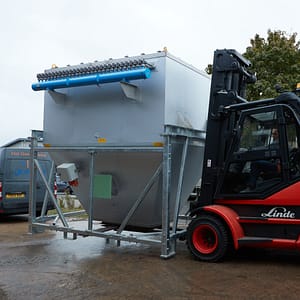




Modern energy-from-waste (EfW) facilities are tasked with a dual challenge: producing usable energy from non-recyclable waste, while ensuring emissions are consistently below stringent environmental thresholds. Whether in municipal waste incineration, RDF combustion, or industrial waste recovery, hot gas filtration is a critical part of the emissions control chain.
With new regulations targeting ultra-low particulate and acid gas emissions, EfW operators must rely on filtration systems that can handle high temperatures, variable gas compositions, and heavy particulate loads. Ceramic hot gas filters have become the proven choice for meeting these performance and reliability needs — without relying on water or complex wet scrubbers.
Understanding Emissions from Waste Incineration
Waste combustion produces a complex flue gas stream containing:
- Particulate matter (PM10, PM2.5) including fly ash and unburned carbon
- Acid gases such as SO₂, HCl, and HF
- Heavy metals and trace organics
The gas exits the combustion chamber at temperatures ranging from 700°C to 1,000°C. Fabric filters can’t withstand these temperatures, and wet scrubbing systems introduce effluent treatment burdens. Ceramic filtration offers a dry, high-temperature alternative that simplifies compliance.
Why Ceramic Filters Are Ideal for EfW Applications
In EfW plants, filtration systems must operate continuously, often 8,000+ hours per year, and handle dust loads that vary with waste composition. Ceramic filters are uniquely suited to this environment, offering:
- Operating temperature up to 1000°C without degradation
- 99.99% removal efficiency for PM2.5 and ultrafine particles
- Compatibility with sodium bicarbonate or lime sorbents for acid gas removal
- Non-combustible construction that eliminates filter fire risk
- Durability through thermal cycling and fuel variation
The combination of dry sorbent injection (DSI) and ceramic filtration captures both particulates and acid gases in one compact housing — ideal for plants aiming to simplify their flue gas treatment line-up.
PM and Acid Gas Removal Without Water
Wet scrubbers have historically been used to remove HCl and SO₂, but they come with high operational costs, sludge handling, and complexity. A ceramic filtration system paired with dry sorbent injection eliminates this need entirely.
Sodium bicarbonate is injected into the gas stream upstream of the filter. Acid gases react with the sorbent, forming salts that are then captured alongside fly ash by the ceramic elements. This approach can bring SO₂ and HCl levels below 5 mg/m³ — in line with modern BREF and IED limits — with minimal maintenance and no wastewater production.
Case Study: EfW Plant with Ceramic Filter System
One verified UK-based EfW plant processes 25,000 tonnes of non-recyclable waste per year using a moving grate incinerator. A Glosfume ceramic filter system was installed to handle 11,000 m³/h of flue gas at 850°C.
The system included 84 ceramic filter elements housed in an insulated mild steel vessel, with automated pulse-jet cleaning and sodium bicarbonate injection upstream. After installation, the plant recorded:
- Particulate emissions consistently < 1 mg/m³
- SO₂ emissions below 3 mg/m³
- Stable pressure drop over 16 months of continuous operation
- No water usage or effluent management required
This configuration enabled the plant to meet IED Chapter IV requirements while maintaining high uptime and reducing operating cost per tonne of waste processed.
Designing for Availability and Maintenance
EfW plants prioritise uptime. Filtration systems must support scheduled shutdown intervals, not dictate them. Ceramic filters are well-suited for this demand:
– Backpulse cleaning allows online operation with no filter changeouts
– Ceramic elements last several years, often exceeding 24 months
– Pressure drop remains stable with proper pulse settings and hopper flow
– Housing access is designed for easy inspection and minimal disruption
Glosfume’s modular housing designs allow EfW operators to scale systems from 5,000 to 30,000 m³/h while maintaining compact footprints and serviceability. Integration with emissions monitoring systems ensures full compliance reporting without manual sampling.
Energy-from-waste systems face more pressure than ever to deliver clean energy with near-zero emissions. Ceramic filtration technology enables EfW plants to achieve these targets without water, effluent, or high-maintenance fabric filters.
By combining dry sorbent injection and high-efficiency ceramic elements, operators can reduce PM2.5, SO₂, and HCl levels far below regulatory limits — while improving uptime and reducing lifecycle cost. For new builds or retrofit upgrades, ceramic filters are now a central component of clean EfW design.