



With tightening emissions regulations and rising maintenance costs, many industrial plants are now exploring how to upgrade their filtration systems — without overhauling their entire process line. Retrofitting ceramic filters into existing plants offers a practical path to improved performance, reduced operating costs, and long-term compliance.
Whether replacing ageing fabric baghouses or enhancing control after combustion or thermal treatment processes, ceramic filters provide high-temperature, high-efficiency filtration without water or quenching. The key is designing the retrofit correctly — mechanically, thermally, and operationally — to integrate with your existing infrastructure.
When to Replace Fabric Filters with Ceramic Elements
Fabric filters, particularly those used in energy-from-waste, pyrolysis, and industrial combustion plants, often show signs of fatigue well before reaching end of design life. Common drivers for retrofits include:
- Degraded filter bags and rising emissions
- High compressed air use and short bag life
- Filter fires due to carbon or spark carryover
- Corrosion in baghouse housings
- Frequent outages for maintenance or bag changes
Ceramic filters eliminate these issues. With operating temperatures up to 1000°C, non-combustibility, and long service life, they remove both particulate matter and acid gases when paired with dry sorbents — all within a dry, pulse-cleaned system.
Mechanical and Flow Considerations
A successful retrofit starts with understanding the gas flow, temperature, and dust loading in your current system. Ceramic filters typically offer lower face velocities and more consistent pressure drop than fabric bags. This may influence the housing size and number of elements required.
If you’re retrofitting into an existing baghouse shell, you’ll need to assess:
– Structural integrity of the housing at operating temperatures
– Space for ceramic element mounting, sealing, and removal
– Whether current hopper and dust discharge systems are compatible
– Backpulse system capacity and air receiver sizing
Most retrofits also require insulating or relining the housing to maintain temperature above dew point — especially when acid gases or tars are present.
Case Example: Baghouses Converted to Ceramic
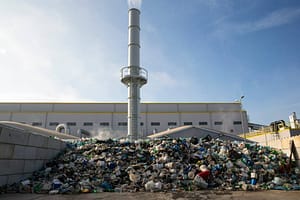
In one retrofit project, an energy-from-waste facility converted its three-compartment baghouse (12,000 m³/h total flow) to a ceramic filter system. The goal was to reduce PM2.5 emissions and eliminate filter fires caused by carbon-rich fly ash.
The retrofit involved:
- Removing fabric filter cages and bags
- Installing ceramic filter elements with upgraded tube sheets
- Replacing pulse valves and installing a larger air receiver
- Adding insulation and adjusting hopper discharge angles
After commissioning, the plant achieved PM emissions < 1 mg/m³ and eliminated unplanned outages related to baghouse issues. Compressed air usage dropped significantly, and filter element life exceeded 18 months with no replacements needed during the first two years.
Housing and System Upgrades
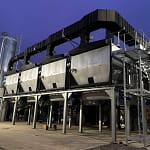
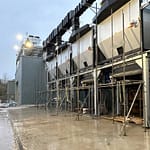
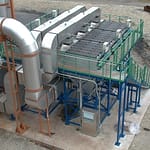
If retrofitting into a new or dedicated housing, Glosfume’s modular systems offer pre-engineered options to match flow rates from 1,000 to 30,000 m³/h. Housings come complete with inlet diffusers, support structures, insulation, and pulse jet cleaning equipment.
During retrofit design, engineers must account for:
– Differential pressure sensor placement
– Inlet and outlet duct transitions
– Access doors for inspection
– Fire safety and pressure relief systems if applicable
Many projects also take the opportunity to upgrade control panels or integrate with plant DCS for better monitoring of emissions, pressure drop, and pulse system operation.
Integration with Sorbent Injection and Gas Handling
If the retrofit aims to improve acid gas control, the ceramic filter system can be paired with sorbent injection — typically sodium bicarbonate or hydrated lime. Dosing can often be installed upstream of the filter inlet and tied into existing plant controls.
Ceramic filters capture reaction products such as NaCl or CaSO4 along with dust, all discharged via hopper. Dust must be kept dry and flowable, and the discharge system may require purging or sealing to prevent ingress of ambient air and condensation.
For systems handling tars or condensables, pre-heating or maintaining sufficient insulation is critical to preventing filter fouling. CFD modelling or gas flow profiling can help ensure even loading across the ceramic filter bank.
Benefits of Ceramic Filter Retrofits
Upgrading to ceramic filtration offers immediate and long-term gains:
- Lower emissions (PM2.5, SO₂, HCl) without water
- Longer filter life and fewer shutdowns
- No fabric filter fires or thermal degradation
- Reduced compressed air and maintenance costs
- Improved process uptime and emissions stability
These benefits apply across sectors — from waste incineration to metals recovery and even pilot pyrolysis systems.
Retrofitting ceramic filters into existing industrial plants is a practical, cost-effective way to boost performance and comply with modern emissions standards. With careful planning around gas flow, housing design, and pulse cleaning, ceramic filters can slot into your existing footprint — while dramatically improving reliability and efficiency.
For plants dealing with high dust loads, acid gases, or filter fires, ceramic retrofits deliver measurable value with minimal downtime. As environmental standards rise, these upgrades are no longer optional — they’re a smart investment in cleaner, more stable operation.