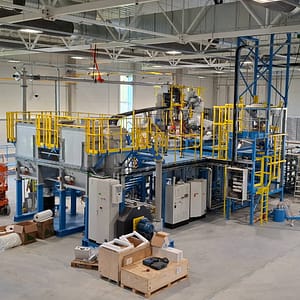




In pharmaceutical manufacturing, research laboratories, and medical waste management, incineration is often the only viable method for safely disposing of bio-hazardous and controlled materials. However, combustion of these sensitive wastes produces complex gas streams containing sub-micron dust, trace organics, and potential bioaerosols — all of which must be removed effectively before exhaust gases are released to the atmosphere.
Conventional filtration methods, such as bag filters, often fall short in these applications due to high temperatures, sterility concerns, and inconsistent particulate loads. Ceramic filters offer a clean, dry, and robust solution that captures PM2.5 and smaller particles at up to 1000°C, with minimal maintenance and no combustion risk. This article explores how ceramic filtration supports clean combustion in pharmaceutical and controlled waste incinerators.
What’s in Pharmaceutical and Controlled Waste?
Waste streams from pharmaceutical and biotech processes vary widely, but often include:
- Expired or contaminated active pharmaceutical ingredients (APIs)
- Packaging waste with chemical residues
- Labware, PPE, and disposable process components
- Sharps, solvents, and biological media
When incinerated, these materials produce hot gas streams that can contain fine particulate matter, halogenated compounds, dioxin precursors, and potentially biohazardous residues. Effective filtration is essential to prevent contamination, protect downstream equipment, and ensure compliance with strict emissions limits for PM10, PM2.5, HCl, and heavy metals.
Why PM2.5 and Sterility Matter
Pharmaceutical plants and laboratories are often located near populated areas or environmentally sensitive zones. As a result, the margin for error in emissions is small. Fine particulate matter (especially PM2.5) presents both a regulatory and reputational risk.
In addition, facilities handling biohazardous materials or cytotoxic waste must be confident that no viable biological material survives the combustion and filtration process. Ceramic filters operate at elevated temperatures, ensuring that dust captured on the filter surface has been exposed to sterilising conditions.
This combination of high-efficiency capture and high-temperature operation makes ceramic filtration particularly suitable for incinerators handling pharmaceutical and controlled waste streams.
Ceramic Filters for Clean Combustion
Ceramic filters function through surface filtration, capturing particles on the outer layer of a porous ceramic element. These filters are continuously cleaned via pulse-jet compressed air, allowing 24/7 operation without shutdowns.
Benefits of ceramic filters in this application include:
- Operating temperatures up to 1000°C
- High efficiency for sub-micron dust (≥99.99%)
- Resistance to thermal shock, corrosion, and combustion
- Non-fibrous, inert media suitable for clean environments
- Compatibility with dry sorbents to control acid gases
By combining ceramic filtration with sodium bicarbonate or lime injection, plants can capture HCl, SO₂, and other acid gases alongside dust — without water, sludge, or filter bag disposal.
Case Study: Pharmaceutical Incinerator Retrofit
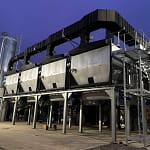
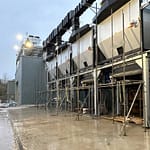
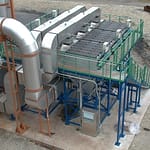
A specialist waste treatment facility in the UK, handling pharmaceutical R&D and controlled waste streams, retrofitted its incinerator with a Glosfume ceramic filtration system. The aim was to improve emissions performance and eliminate filter changeouts caused by bag degradation.
Key specifications:
- Gas flow: 4,500 m³/h at 850°C
- Dust type: Fine carbonaceous and pharmaceutical particulate
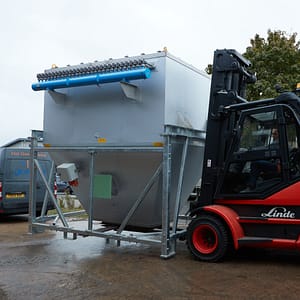
- System: 30 ceramic elements in compact modular housing
- Dry sorbent injection upstream for HCl control
Results:
- PM2.5 consistently < 1 mg/m³
- HCl emissions reduced below 5 mg/m³
- No filter failures over 24 months of operation
- Improved operational uptime and reduced disposal costs
This upgrade enabled the facility to meet its permit conditions while simplifying filter handling and improving sterility control in the filtration area.
Uptime, Maintenance, and Compliance
Ceramic filter systems are engineered for long service life — often exceeding two years between element replacements. Pulse-jet cleaning keeps pressure drop stable and allows uninterrupted operation. Maintenance is limited to standard inspections, hopper emptying, and compressed air monitoring.
Custom housings can be designed for limited space or integrated into existing incinerator systems. Modular layouts are available for gas volumes as low as 500 m³/h — ideal for smaller hospital or lab incinerators requiring reliable filtration with minimal footprint.
Pharmaceutical and controlled waste incineration requires high-integrity emissions control, both to meet regulatory limits and to maintain clean, secure operations. Ceramic filters offer a high-performance solution that captures PM2.5 and acid gases at elevated temperatures — without water, filter bags, or shutdowns.
With proven results in the UK and Europe, ceramic filtration is a dependable technology for healthcare, laboratory, and pharmaceutical sectors aiming to meet emissions goals with confidence and control.