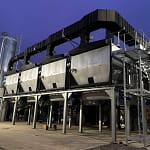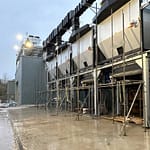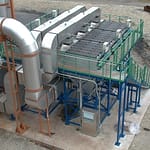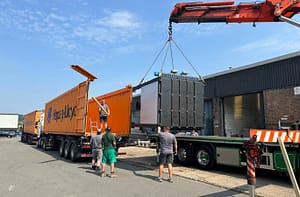




Operating a waste or hazardous materials incinerator means navigating some of the most stringent emissions regulations in the industrial sector. From the Industrial Emissions Directive (IED) in Europe to local air quality thresholds and public scrutiny, plant approval and long-term operation depend on proven, high-performance gas filtration.
Advanced ceramic filtration offers a robust, dry, and future-proof method for removing particulates, acid gases, and heavy metals—without relying on water handling or multiple process stages. This article outlines how ceramic systems support compliance, plant approval, and operational reliability in hazardous and clinical waste treatment facilities.
Regulatory Drivers for Hazardous Waste Filtration
The IED and associated Best Available Techniques (BAT) conclusions set specific emissions limits for dust, HCl, HF, SO2, NOx, and heavy metals. In hazardous waste incineration, authorities often demand even stricter limits—especially for PM2.5, mercury, and visible stack emissions. The legal limits are only part of the equation: many sites also face public consultation and planning requirements that go beyond what’s written in permits.
In this context, incinerators must demonstrate not only compliance on paper, but clean visual output, reliable performance during start-stop cycles, and low-maintenance operation. Filters that clog, corrode, or require frequent shutdowns for replacement are increasingly seen as incompatible with modern waste-to-energy expectations.
How Ceramic Filters Meet and Exceed Emissions Limits
Ceramic filtration systems capture fine and ultra-fine particulates, including PM2.5 and submicron dust, using a surface filtration mechanism that retains cake at the external surface of the element. This ensures consistent capture efficiency—even for very light or volatile ash fractions—while allowing for backpulse cleaning to manage pressure drop and ash load.
Field data from clinical and hazardous waste sites show particulate emissions below 1 mg/m³, even with variable loads and high contaminant levels. When paired with upstream dry sorbent injection (such as sodium bicarbonate or activated carbon), ceramic filters also remove acid gases and volatile metals in a single pass—eliminating the need for wet scrubbers or reheaters.
Benefits for Plant Operation and Compliance Strategy
For operators, the benefits go well beyond emissions numbers. Ceramic filter systems are fully dry, meaning there’s no need for effluent handling, sludge management, or discharge licensing. The filters are thermally and chemically stable, making them suitable for flue gas temperatures from 400–1000°C and chemically aggressive combustion environments.
Pulse-cleaning keeps the filters online for extended durations—often several years—reducing shutdowns and eliminating the risks of bag breakage or media degradation. With consistent pressure drop and reliable performance even during fuel variation or shutdown/startup, ceramic systems help meet rolling average limits and ensure environmental reporting is predictable and defensible.
Planning and Public Perception Advantages
One critical, often overlooked advantage of advanced filtration is visual: no visible plume, no odour, no steam trails. While many incinerators are compliant on emissions, stack visibility can still cause public concern or planning delays. Ceramic systems reduce stack opacity significantly—often to nothing—removing a key barrier in plant siting and public acceptance.
In clinical and animal by-product waste plants, this is especially valuable. Sites are often located near residential or sensitive areas, and planning bodies increasingly assess plume visibility alongside chemical emissions data. A dry, high-temperature ceramic filter system eliminates the need for dilution air or flue gas reheating to meet these requirements.
For hazardous and clinical waste incineration, ceramic filtration is more than a compliance tool—it’s a route to lower risk, smoother planning, and long-term system reliability. By removing PM2.5, acid gases, and heavy metals at high temperatures and without water or bag filters, ceramic systems offer a proven solution for operators who need to meet today’s standards—and tomorrow’s.