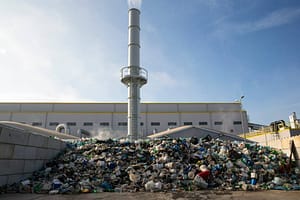




Modern energy-from-waste (EfW) plants must strike a balance between thermal efficiency, emissions compliance, and operational simplicity. With regulators targeting not just particulate mass, but particle size, acid gases, and visible emissions, filtration systems are under more scrutiny than ever. For EfW operators, the question is no longer whether to filter — but how to do it with the lowest footprint, maintenance, and running cost.
This article explores why ceramic filtration systems are increasingly chosen in EfW installations and what makes them particularly suited to these demanding gas streams.
Why EfW Flue Gases Are Challenging
EfW processes produce hot, dust-laden flue gases that often contain acid gases (like HCl and SO2), heavy metals, and submicron particulates. Depending on the waste feedstock, gas temperature at the filtration point may range from 400–900°C. These conditions are too aggressive for standard bag filters without cooling or dilution air, both of which increase system complexity and energy loss.
Further complications include variable loading during startup and shutdown, the need for consistent PM2.5 capture, and the risk of visible stack plumes—even when emissions are technically compliant. As EfW plants are often located near urban centres, planners now expect clean stacks as well as clean data.
How Ceramic Filters Solve EfW Challenges
Ceramic filtration operates at high temperature without the need for gas cooling or water injection. Filters are surface-loading monoliths that capture particulates on their outer wall, which are then cleaned by compressed air pulses. The ceramic elements remain dimensionally stable at up to 1000°C, making them ideal for direct integration after the boiler or SCR.
By dosing sodium bicarbonate or hydrated lime upstream, the same system can also neutralise acid gases. This allows EfW plants to remove dust and HCl/SO2 in a single dry-stage filter. There’s no water to manage, no wastewater permit, and no complex heat exchange required.
Real-World Emissions Results
In multiple UK and EU installations, ceramic filters in EfW plants have delivered particulate emissions consistently below 1 mg/m³—even with mixed municipal or industrial waste. When used with optimised dry reagent dosing, HCl and SO2 levels fall below 5 and 20 mg/m³ respectively. These results easily meet IED limits and often exceed them, supporting project approval in sensitive air quality zones.
What’s more, these outcomes are maintained over time. Ceramic filters offer multi-year lifespans without degradation or reactivity, even under cyclic or variable load conditions.
Why Simplicity Matters in EfW Design
EfW plants must operate continuously with minimal intervention. Bag filters can require frequent inspection, replacement, and temperature control. Wet scrubbers add water handling and sludge disposal requirements. Ceramic systems, by contrast, are modular, dry, and low-touch. Pulse-cleaning is automated, and hopper discharge is simple and solid-phase only.
This makes ceramic filters especially valuable in containerised EfW, mobile waste treatment units, and decentralised facilities where staffing and support infrastructure are limited.
Space and Integration Benefits
High-efficiency baghouses and wet scrubbers can require substantial height and footprint—especially when flue gas reheating or multi-stage filtration is needed. Ceramic filter units are more compact and can be installed vertically or horizontally depending on layout. They’re also well suited to retrofit scenarios, where emission standards are tightening but space and downtime are limited.
Some EfW systems now integrate catalytic ceramic elements to combine dust removal with NOx control, further reducing equipment count and operational steps.
For energy-from-waste applications, ceramic filtration delivers a rare combination: ultra-low emissions, high-temperature resilience, and long-term system simplicity. As emission limits tighten and planning scrutiny increases, ceramic filters offer EfW operators a reliable path to both compliance and operational stability—without the footprint, water handling, or wear associated with traditional systems.
What works for EfW today isn’t just filtration—it’s smart, future-proof design that keeps emissions clean and processes efficient.