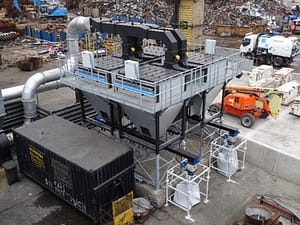




Choosing the right filtration technology is a critical decision for industrial operators. Whether dealing with biomass combustion, incineration, or metal recovery, the filtration system must control particulate and gas-phase emissions while withstanding harsh thermal and chemical environments. Two widely used options—ceramic hot gas filters and fabric bag filters—differ significantly in performance, durability, and long-term cost. Understanding these differences is key to selecting the system best suited to your operational and environmental requirements.
Operating Temperature and Material Limits
Bag filters typically operate effectively up to around 240°C using PTFE or fibreglass media. In processes exceeding this range, high-temperature materials such as P84 or glass-ceramic blends are required—but they often involve higher maintenance and shorter service life. In contrast, ceramic hot gas filters can operate safely at continuous temperatures up to 1000°C. This makes them ideal for furnaces, incinerators, and other combustion applications where high flue gas temperatures are unavoidable. Ceramic elements also maintain their structure during temperature fluctuations and are resistant to thermal shock.
Particulate Capture Efficiency
Both technologies offer high particulate removal efficiency under optimal conditions. However, ceramic filters consistently achieve emissions below 3 mg/m³, with some systems reaching sub-milligram levels even for PM2.5. Bag filters may struggle to maintain such low levels without pre-treatment or post-filtration polishing. In installations where regulatory or urban planning conditions demand ultra-low particulate emissions, ceramic filtration provides greater margin and confidence.
Chemical Resistance and Gas Handling
Acid gases such as HCl, SO2, and HF present challenges for traditional bag filters. Many fabric media degrade over time in acidic or corrosive atmospheres, especially when combined with condensation near the dew point. Ceramic filters, on the other hand, are chemically inert and compatible with dry sorbent injection systems for acid gas neutralisation and dioxin control. Their non-reactive surfaces provide a stable platform for reagent capture and prevent long-term degradation of filtration performance.
Footprint and Mechanical Integration
Bag filter housings often require spark arresters, dilution air inlets, and complex ducting to reduce inlet gas temperatures. This increases both footprint and installation complexity. Ceramic filter systems can handle hot gases directly, eliminating the need for cooling or conditioning equipment. This simplifies plant layout and is particularly advantageous where space is limited, such as in retrofit projects or rooftop biomass installations. These challenges are commonly faced in renewable energy and energy-from-waste installations.
Maintenance and Lifespan
Bag filters typically require regular replacement of filter bags, especially in high-load or high-acid environments. Maintenance often involves confined space entry and downtime. Ceramic elements, by contrast, are pulse-cleaned in situ and typically last for several years under normal operating conditions. Although the initial investment may be higher, reduced replacement frequency and minimal downtime often offset this cost over the system’s lifetime. Custom-engineered systems also support longer operating intervals with minimal manual intervention.
Lifecycle Cost Considerations
Upfront cost is only one component of a filtration system’s financial profile. Energy consumption, consumables, maintenance labour, and potential downtime all factor into lifecycle cost. Systems with stable pressure drop, long element life, and fewer change-out events tend to deliver better value over time. For operations with tight environmental performance obligations, the reliability and low emissions of ceramic filters often justify the investment.
Both bag filters and ceramic filtration systems have their place in industrial air pollution control. The right choice depends on factors such as temperature, gas chemistry, emission targets, and operating constraints. For high-temperature, chemically aggressive, or low-emission applications, ceramic filtration offers proven advantages in durability, performance, and footprint efficiency.