As NOx reduction technologies such as Selective Catalytic Reduction (SCR) and Selective Non-Catalytic Reduction (SNCR) become standard in combustion processes, operators are discovering a secondary problem: post-DeNOx emissions can carry both unreacted ammonia — known as ammonia slip — and catalyst dust. These by-products are increasingly subject to scrutiny due to their corrosiveness, odour, and environmental impact.
Ceramic filtration provides a high-temperature, dry solution to capture these emissions effectively. When installed downstream of DeNOx systems, ceramic filters remove PM2.5, trap catalyst particulates, and reduce ammonia-bound compounds, supporting compliance and system reliability.
Understanding Ammonia Slip and Catalyst Dust
In SCR systems, ammonia is injected into the flue gas and reacts with NOx over a catalyst surface, forming nitrogen and water. However, incomplete reaction — due to temperature fluctuations or maldistribution — leads to ammonia slip. This residual ammonia can:
- React with SO₃ to form sticky ammonium bisulphate
- Corrode downstream ducting and heat exchangers
- Trigger odour complaints and permit exceedances
In parallel, catalyst degradation releases fine particles of vanadium, titanium, or zeolite materials — often <1 µm in diameter. These dusts are abrasive, chemically active, and difficult to capture with conventional bag filters, especially at elevated temperatures.
Ceramic Filters as a Downstream Barrier
Ceramic filters operate reliably at 300–1000°C, making them ideal for post-DeNOx installation without gas cooling. They offer:
- Surface filtration for catalyst and ammonium salt capture
- Non-combustible media resistant to acidic and reactive dust
- Pulse jet cleaning to remove soft deposits before buildup occurs
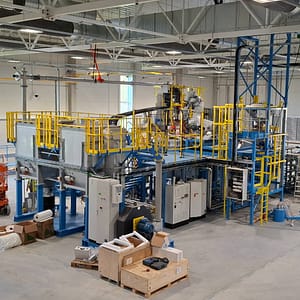
- Modular housing for easy retrofit into existing ductwork
For plants seeking to capture fine solids and reduce the effects of ammonia slip without introducing water or quench towers, ceramic filters offer a dry, compact, and low-maintenance solution.
Case Example: Biomass Plant with Ammonia Slip
A Northern European biomass facility running an SNCR system experienced ongoing fouling of its economiser due to ammonium bisulphate deposition. Dust samples also indicated elevated levels of catalyst fines migrating through the flue path. The gas stream averaged 700°C, with flow at 12,000 m³/h.
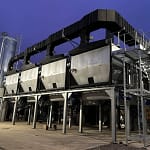
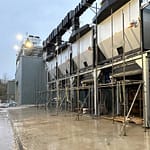
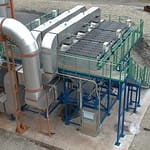
Glosfume supplied a ceramic filtration system with:
- 96 vertical ceramic filter elements
- Integrated pulse cleaning with real-time DP monitoring
- Ash discharge into sealed collection containers
Results after 6 months of operation included:
- PM2.5 emissions < 1 mg/m³
- Elimination of ammonium bisulphate deposition downstream
- No odour complaints from adjacent sites
- Reduced load on downstream heat exchangers
The plant extended its boiler uptime and reduced maintenance associated with ash handling and fouling — without needing to alter its SNCR configuration.
Integration and System Design Considerations
When installing ceramic filters after DeNOx systems, engineers should consider:
- Gas temperature: Ceramic filters function optimally between 300–1000°C, ideal for direct-line post-SCR installation.
- Dust type: Catalyst dust is typically very fine and abrasive — requiring durable filter media and surface filtration.
- Maintenance access: Pulse cleaning systems and access doors allow continuous operation and periodic inspection.
- Downstream impact: Reducing slip and dust protects economisers, reheaters, and environmental sensors.
For systems where VOCs or dioxins are also present, ceramic filters can be combined with catalytic filtration or dry sorbents, enabling multi-pollutant control in a single housing.
Ammonia slip and catalyst dust are often overlooked challenges in high-efficiency combustion plants. Left unaddressed, they cause corrosion, emission breaches, and high maintenance costs. Ceramic filtration offers a proven, dry solution — capturing fine particulate and reactive compounds at high temperature without quenching or frequent filter changeouts.
For operators running SCR or SNCR systems, ceramic filters are a straightforward and effective way to protect plant performance, reduce downtime, and meet tightening environmental standards.