



Even the best-designed filtration system will face the unexpected — from power failures and fan trips to unplanned process interruptions. In high-temperature applications, these events pose a serious risk to filtration hardware. Ceramic filters in particular can suffer damage if exposed to sudden thermal shock or pressure surges. But with the right design safeguards, plants can mitigate these risks and maintain filter integrity even during abnormal shutdowns.
What Makes Unplanned Shutdowns So Dangerous?
When a process running at 800–950°C suddenly loses airflow or encounters a cold air backdraft, the thermal gradients inside the filtration housing can change rapidly. This may cause uneven contraction of ceramic elements — a known cause of cracking or mechanical stress failure. Similarly, if duct pressure spikes during isolation or bypass activation, filters can be exposed to damaging overpressure loads.
Unlike gradual cooling during controlled shutdowns, emergency stops leave no time for stabilisation. Systems must be built to tolerate these scenarios without compromising the filter structure or emissions performance upon restart.
Safeguards to Protect Ceramic Filters
Effective protection is achieved by combining hardware resilience with smart system design:
- Bypass Dampers: Rapid-acting dampers allow hot gases to divert away from the filter module if fans fail or upstream temperature spikes.
- Overpressure Relief: Safety panels or valves prevent excessive static pressure from building up inside the housing during flow interruptions.
- Thermal Insulation: Consistent housing insulation prevents localised cold spots that trigger cracking.
- Purge Air Hold-Off: Pulse-jet cleaning should be paused during system trips to avoid introducing cold air to hot ceramic surfaces.
- Ramp-down Protocols: Where possible, staged cooling with residual heat from upstream processes helps reduce stress during stop-start cycles.
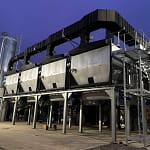
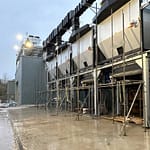
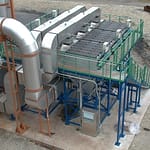
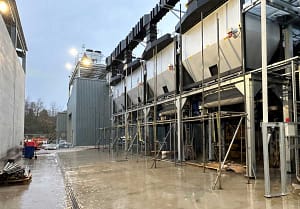
Systems such as Glosfume’s modular ceramic filter housings are designed with built-in allowances for thermal expansion, gasket flexibility, and controlled airflow separation — all vital for shutdown resilience.
Case Study: Fan Trip Recovery Without Filter Damage
At an EFW facility operating at 850°C, a main fan trip caused a 20-second stagnation period. Due to system design including dampers and staged insulation, ceramic filters showed no damage on inspection, and pressure drop remained unchanged after restart. Pulse logic had been disabled automatically via DCS input, preventing thermal shock from cold compressed air. The system returned to service within an hour, without filter replacement or emissions exceedance.
Designing for Reality, Not Just Spec Sheets
Process specifications often assume ideal conditions, but experienced engineers know: unexpected shutdowns happen. Whether due to power loss, trip signal, or supply interruption, your filtration system must survive them. That means asking not only “How well does this filter work?” — but also “What happens when something goes wrong?”
Designing for failure doesn’t mean expecting it — it means ensuring resilience when it arrives.
Unplanned shutdowns pose real risks to ceramic filtration systems, especially in high-temperature applications. With the right safeguards — including pressure relief, bypass dampers, and intelligent pulse control — filters can withstand emergency events without cracking or compromising performance. The result: fewer replacements, faster restarts, and more robust long-term emissions control.