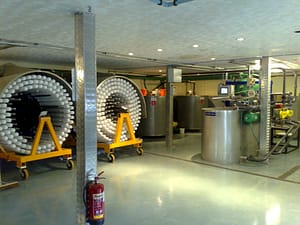




Environmental regulations are becoming increasingly stringent as governments and regulatory bodies push for cleaner industrial processes. Compliance is no longer just a legal requirement; it is a fundamental part of responsible business operations. While meeting emission limits ensures adherence to current laws, industries that invest in advanced filtration technologies can significantly reduce their environmental impact, improve efficiency, and future-proof their operations. Going beyond compliance is not just about avoiding fines—it is about securing long-term sustainability, reducing operational costs, and positioning a business as an industry leader in environmental responsibility.
Understanding Industrial Emissions Regulations
In the UK and across Europe, industries are required to comply with strict emissions regulations designed to reduce air pollution and protect public health. The Industrial Emissions Directive (IED) sets limits on pollutants such as particulate matter (PM10 & PM2.5), volatile organic compounds (VOCs), acid gases, and heavy metals. The Waste Incineration Directive (WID) imposes even stricter controls on incineration plants, requiring them to minimise emissions of harmful substances such as dioxins and sulphur dioxide (SO2). Non-compliance can lead to significant financial penalties, operational shutdowns, and reputational damage.
While these regulations establish minimum emission limits, they do not remain static. Environmental standards are continuously evolving as new research highlights the risks of airborne pollutants. Industries that only aim for compliance may find themselves struggling to adapt when stricter regulations come into force. By investing in technology that consistently achieves emissions well below legal limits, companies can avoid costly future upgrades and ensure long-term compliance.
Why Meeting Regulations is No Longer Enough
Regulatory compliance should be seen as a baseline rather than a final goal. Across various industries, there is growing pressure from governments, investors, and the public to adopt cleaner technologies. Corporate environmental responsibility has become a key factor in business decisions, influencing investor confidence and consumer preferences. Companies that exceed emissions regulations demonstrate a commitment to sustainability, which can enhance their reputation and strengthen customer relationships.
Industries such as biomass energy production, metal processing, and waste incineration are particularly under scrutiny due to their high emissions of fine particulates and acid gases. Traditional filtration methods may enable these industries to meet current regulations, but they often fail to achieve the ultra-low emission levels expected in the future. By proactively implementing more efficient filtration technologies, businesses can position themselves ahead of regulatory changes rather than reacting to them.
Advanced Filtration Technologies for Lower Emissions
Many industries rely on fabric bag filters for particulate removal, but these systems struggle to capture the sub-micron particles that pose the greatest health risks. In high-temperature environments, bag filters degrade quickly, requiring frequent replacement and increasing operational costs. Furthermore, their inability to withstand acidic or alkaline conditions makes them unsuitable for applications where chemical reactions occur within the gas stream.
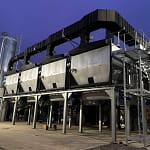
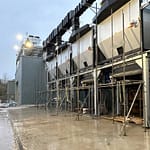
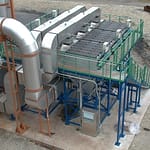
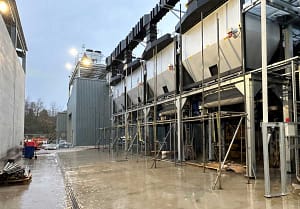
Ceramic hot gas filtration offers a more reliable and efficient alternative. Designed to operate at temperatures up to 1000°C, ceramic filters maintain their structural integrity even in extreme conditions. Their unique microporous structure enables them to capture ultra-fine particulates, including PM2.5 and nanoparticles, achieving emission levels well below regulatory limits. Unlike fabric bag filters, ceramic elements are completely resistant to acid and alkali attack, making them ideal for industries handling aggressive flue gases.
For applications requiring additional pollutant control, ceramic filtration can be integrated with dry scrubbing technology. By injecting sodium bicarbonate or activated carbon into the gas stream, acid gases such as hydrogen chloride (HCl) and sulphur dioxide (SO2) can be neutralised before reaching the filtration system. This combination ensures the removal of multiple pollutants in a single step, reducing the need for complex multi-stage treatment systems.
The Long-Term Benefits of Exceeding Environmental Standards
Exceeding regulatory requirements delivers significant operational and financial benefits. By adopting high-performance filtration technologies, industries can improve energy efficiency, reduce maintenance costs, and extend the lifespan of their filtration systems. Ceramic filters, for example, require far less frequent replacement than fabric bag filters, minimising production downtime and reducing long-term expenses.
Future-proofing is another critical advantage of investing in advanced filtration. As emission limits become stricter, businesses using conventional technology may face expensive system upgrades to remain compliant. Companies that have already implemented high-efficiency filtration will avoid these additional costs, ensuring continuous operation without the risk of non-compliance.
There is also a strong competitive advantage in exceeding emissions regulations. Many industries are now required to provide environmental impact reports to clients, investors, and regulatory bodies. Companies that demonstrate ultra-low emissions and sustainable practices are more likely to secure contracts and maintain strong customer relationships. In sectors such as biomass energy and waste-to-energy, where public perception is crucial, exceeding environmental standards can be a key factor in gaining planning approvals and community support.
Case Studies: How Industries Have Successfully Gone Beyond Compliance
Several industries have already recognised the benefits of exceeding environmental regulations by adopting ceramic hot gas filtration. In the biomass and waste-to-energy sector, plants using ceramic filtration systems have consistently achieved emissions below 3 mg/m³, significantly lower than the standard limits set by the Industrial Emissions Directive. This has allowed them to operate in areas with strict air quality controls while maintaining high levels of efficiency.
In metal processing and chemical production, where acidic and corrosive gases are a challenge, ceramic filters have replaced fabric bag filters, eliminating the risk of chemical degradation. Facilities that previously struggled with filter failures and frequent replacements have seen dramatic improvements in reliability and cost savings.
Incineration plants, particularly those handling hazardous and medical waste, have benefited from the ability of ceramic filtration to remove dioxins and ultra-fine particulates. These facilities must comply with some of the strictest air quality regulations, and ceramic filtration has proven to be the most effective technology for consistently achieving the required standards.
A Proactive Approach to Environmental Responsibility
Meeting environmental regulations is no longer enough in today’s industrial landscape. As emissions standards become more stringent and public expectations rise, businesses must take a proactive approach to emissions control. By investing in advanced filtration technology, industries can achieve ultra-low emissions, reduce operational costs, and future-proof their processes against tightening regulations.
Ceramic hot gas filtration provides a proven solution for industries looking to move beyond compliance. With its ability to withstand high temperatures, resist chemical attack, and capture fine particulates, ceramic filtration ensures superior performance and long-term reliability. Companies that adopt this technology today will be well-prepared for the environmental challenges of the future.
Glosfume has been at the forefront of ceramic hot gas filtration technology for decades, providing industries with innovative solutions that exceed regulatory requirements. For businesses seeking to enhance efficiency, reduce emissions, and secure a sustainable future, Glosfume’s advanced filtration systems offer the ultimate in performance and reliability.