



Hot gas filtration is critical in industries where high-temperature emissions contain harmful particulates, acid gases, and volatile organic compounds. Effective filtration ensures compliance with environmental regulations, protects equipment, and reduces operational costs. Glosfume has specialised in hot gas filtration for over 25 years, developing advanced ceramic filtration systems that outperform conventional filter technologies. Designed for high efficiency and durability, these systems consistently achieve ultra-low emissions while operating in extreme conditions.
Glosfume hot gas filtration systems are widely used in industries such as biomass energy production, waste incineration, chemical processing, and metal smelting. Their ability to handle high temperatures and corrosive gases makes them a preferred choice for businesses seeking reliable, long-term emission control solutions. Understanding how these systems work highlights why they are superior to traditional filtration methods.
The Key Components of a Glosfume Hot Gas Filtration System
At the heart of every Glosfume filtration system are ceramic filter elements, designed to withstand temperatures up to 1000°C while capturing fine particulates, including PM10 & PM2.5. These elements provide exceptional durability, maintaining efficiency even in highly corrosive environments.
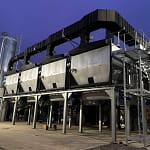
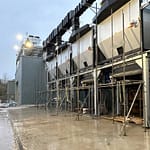
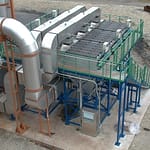
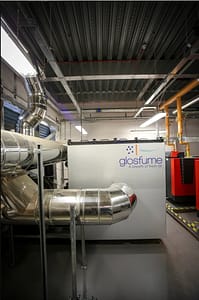
The filtration housing is engineered to ensure optimal gas flow and durability under high-temperature conditions. Manufactured in-house by Glosfume, the housings are constructed from high-grade materials to prevent warping or degradation over time. Modular designs allow for easy scalability, enabling filtration systems to be adapted for different gas volumes and industry requirements.
To maintain consistent performance, Glosfume filtration systems utilise a reverse pulse cleaning mechanism. Over time, captured particulates form a filter cake on the surface of the ceramic elements. The system periodically releases controlled bursts of compressed air, dislodging accumulated particles and maintaining a low pressure drop across the filters. This ensures continuous operation without requiring frequent manual intervention.
For applications requiring additional pollutant control, Glosfume filters can be integrated with dry scrubbing technology. This process involves injecting sodium bicarbonate or activated carbon into the gas stream, neutralising acid gases such as hydrogen chloride (HCl) and sulphur dioxide (SO2). The combination of ceramic filtration and dry scrubbing enhances emission control, ensuring compliance with the strictest environmental regulations.
How the Filtration Process Works
The filtration process begins as hot polluted gases enter the system. These gases, often laden with fine particulates, acid vapours, and other contaminants, flow into the filtration housing, where they pass through a network of ceramic filter elements.
As the gas moves through the ceramic elements, particulates and pollutants are captured on the outer surface of the filters. The microporous structure of the ceramic media ensures that even sub-micron particles are effectively removed, reducing emissions to levels well below regulatory limits.
Over time, the collected particulates build up on the filter elements, increasing resistance to airflow. To maintain optimal performance, the reverse pulse cleaning system activates at pre-set intervals, releasing compressed air through the filters. This dislodges the accumulated dust, which then falls into a collection tray or is removed via an automated conveyor system.
Once filtered, the clean gas exits the system, meeting or exceeding environmental air quality standards. The entire process operates automatically, ensuring maximum efficiency with minimal operator intervention.
Why Ceramic Filtration Outperforms Conventional Filters
Unlike traditional fabric bag filters, which degrade when exposed to high temperatures, ceramic filtration is designed to withstand extreme conditions. Glosfume’s ceramic filter elements remain structurally stable up to 1000°C, eliminating the need for costly cooling systems.
Ceramic filters also provide superior chemical resistance, making them ideal for applications involving acidic or corrosive gases. Conventional fabric filters deteriorate when exposed to acid vapours or alkaline compounds, whereas Glosfume’s ceramic elements maintain their integrity even in harsh chemical environments.
Filtration efficiency is another critical advantage. Glosfume ceramic filters consistently achieve particulate emissions below 3 mg/m³, significantly lower than the 5–10 mg/m³ typically recorded with fabric bag filters. The ability to capture sub-micron and nanoparticle-sized pollutants ensures compliance with the most stringent air quality regulations.
Additionally, ceramic filters have a longer lifespan compared to fabric alternatives. Their durability reduces the frequency of replacements, lowering long-term maintenance costs and improving operational efficiency. Combined with automated reverse pulse cleaning, these systems offer a cost-effective and highly efficient solution for industries requiring reliable high-temperature filtration.
Applications and Industries Benefiting from Glosfume Technology
Glosfume hot gas filtration systems are widely used in industries where high-temperature emissions must be controlled to meet environmental standards. Biomass and waste-to-energy plants rely on ceramic filtration to remove fine particulates, ensuring compliance with strict air quality regulations while maintaining energy efficiency.
In chemical and metal processing, where flue gases often contain corrosive substances, Glosfume filters provide long-term reliability by resisting chemical degradation. Facilities processing metals such as nickel, cobalt, and uranium benefit from the high filtration efficiency and durability of ceramic elements.
Incineration facilities, particularly those handling hazardous and medical waste, require advanced filtration to control the release of dioxins and ultra-fine particulates. Glosfume’s technology allows these facilities to exceed regulatory requirements, reducing their environmental impact while maintaining compliance.
Other industries, including cement, glass, and ceramics manufacturing, also benefit from the ability of Glosfume filtration systems to operate at high temperatures while effectively capturing fine particulates. The modular design of these systems ensures that they can be scaled to meet specific industry needs.
The Future of Hot Gas Filtration
As industries face increasingly stringent environmental regulations, the need for reliable and efficient hot gas filtration solutions continues to grow. Glosfume’s advanced ceramic filtration systems offer a proven solution for businesses seeking to improve air quality, reduce emissions, and enhance operational efficiency.
By combining high-temperature resistance, superior chemical durability, and ultra-low emissions performance, Glosfume filtration technology sets the standard for industrial air pollution control. Industries investing in these systems benefit from long-term cost savings, reduced maintenance requirements, and the assurance of compliance with evolving environmental regulations.
For businesses looking to optimise their filtration processes, Glosfume’s expertise in hot gas filtration provides a trusted, effective, and future-proof solution.