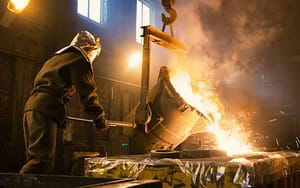




Industrial processes operating above 700°C—such as pyrolysis, metal smelting, biomass gasification, and catalytic cracking—produce extremely aggressive gas streams. These contain a mix of fine particulates, corrosive compounds, and thermal fluctuations that most filters can’t tolerate. Designing a high temperature gas filtration system capable of handling gas at 900°C without degradation, leakage, or excessive pressure drop is no small task. Yet for many modern emissions targets, especially where PM2.5 removal at high temp is essential, it’s become a design priority.
This article breaks down how robust ceramic gas filter systems are engineered to function continuously at extreme temperatures without system failure—offering practical insight for engineers specifying filtration for high-temperature zones.
Why Most Filters Fail Above 250–300°C
Traditional bag filters are designed for flue gas temperatures up to 240°C. Some use PTFE, P84, or fibreglass blends to reach 260–280°C, but all face similar challenges beyond that range:
- Thermal degradation: Most fabrics lose structural integrity or shrink when exposed to prolonged high temperatures.
- Chemical attack: Gases like HCl, HF, and SO2 corrode fibres or form acidic dewpoints that degrade the filter media.
- Flammability: Bag filters are at risk when exposed to carbon-rich or flammable particulates, especially in pyrolysis or biomass systems.
Processes such as calcination, catalyst regeneration, or smelting require filtration above 700°C, pushing far beyond the reliable range of fabric-based systems. At these levels, the industry has turned to ceramic filtration.
Ceramic Filtration Technology – How It Works
Ceramic filters operate via surface filtration. Rather than penetrating into the media as with deep-bed filters, particulates collect on the outer wall of the ceramic element, forming a filter cake that enhances capture efficiency. The elements are extruded monoliths with precise wall porosity, typically G3 or S4 grade, which allows gas to pass through while trapping dust at the surface.
Cleaning is handled by pulse jet systems. Compressed air is delivered in reverse through each element in carefully timed cycles. Because ceramic filters operate continuously at up to 1000°C, this cleaning must be highly stable—avoiding thermal shock or element cracking.
In high-temperature zones, ceramic filters offer a key advantage: they do not deform, melt, or burn. This makes them uniquely suited to hot gas filtration systems operating above 800°C, with ceramic gas filters maintaining structural integrity over multi-year cycles.
What Happens at 900°C – Pressure, Thermal Shock & Material Fatigue
At 900°C, even metallic structures experience creep, warping, and expansion. The filtration system must be engineered to handle thermal gradients, rapid changes in gas load, and high particulate concentrations. Here’s where ceramic filters are subjected to some of the most severe operational stress:
- Thermal shock resistance: Elements must endure temperature swings without cracking. S4 elements are tested for this resilience.
- Back pulse pressure: Pulse jet cleaning must use compressed air or nitrogen at appropriate pressure (typically 4–6 bar) to dislodge high-temperature dust cakes without damaging the element.
- Housing expansion: The filter housing and nozzle plates must accommodate expansion using high-temp steels or expansion joints.
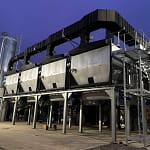
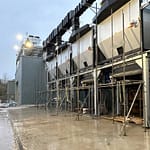
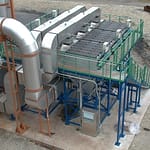
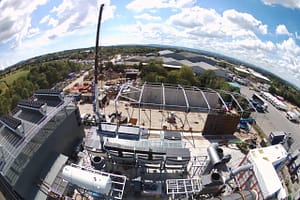
Glosfume’s filtration systems are designed with G3 and S4 ceramic elements, capable of handling cyclic thermal loads, pulse fatigue, and prolonged exposure to high-temperature corrosive gases. They are mounted within housings that account for pressure fluctuation, expansion behaviour, and slag accumulation at the base of the chamber.
Case-Equivalent Design Scenarios
Let’s consider a 3,000–15,000 m³/h gas stream exiting a pyrolysis unit at 850–950°C. The gas contains 1–2 g/m³ of submicron carbon, unconverted char, and traces of metallic oxides. To handle this, a high-temperature filtration system must be:
- Modular—so the number of ceramic elements can scale with flow volume.
- Compact—allowing placement above or alongside reactors, where footprint is limited.
- Dry cleaning—relying on pulse jet only, without the need for wet quenching or cooling.
These conditions are common in renewable fuel production, chemical waste gas treatment, and carbon black capture. A successful system in this range must prevent element bridging, avoid condensation, and maintain sub-3 mg/m³ emissions without bypass. Modular HTMC filter housings from Glosfume are configured exactly for this use case.
Choosing the Right Element and Housing Material
At these temperatures, material selection is critical. G3 ceramic elements offer reliable surface filtration for less aggressive dusts and temperatures up to 800°C. Where carbon, metal, or alkali-rich dusts are involved—and where pressure spikes or shutdown cycles are frequent—S4 elements offer added thermal shock resistance and mechanical strength.
Housing design must use high-temperature steels such as 1.4841 (314 stainless) or equivalent when operating above 750°C. For milder service temperatures, carefully reinforced carbon steel may suffice, provided insulation and expansion handling are adequate.
In all cases, element seals, nozzle plates, and compressed air manifolds must also be rated for thermal expansion and particle abrasion.
Conclusion: Filter Once, Run Clean – The Long-Term Efficiency Argument
Filtering process gases at 900°C is no longer an edge case—it’s the new normal in advanced recovery, pyrolysis, and thermal treatment systems. Ceramic filtration allows operators to run continuously without dilution, cooling, or water injection. With long life cycles, stable emissions performance, and modular designs, these systems reduce operational downtime and simplify compliance in high-stakes environments.
For engineering teams designing gas treatment above 800°C, ceramic filters provide the most robust, reliable option—allowing you to filter once and run clean for years.