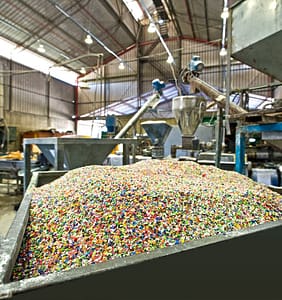




Introduction to Waste and Hazardous Materials Incineration
Role of Incineration in Modern Waste Management
Waste incineration is a vital waste management process used for municipal, industrial, and hazardous materials. It significantly reduces waste volume while preventing landfill overuse and mitigating environmental risks associated with waste storage. In addition, incineration supports waste-to-energy initiatives by converting heat from combustion into electricity or district heating, making it a dual-purpose solution.
The process is especially important for disposing of non-recyclable or dangerous materials such as animal carcasses, medical waste, and industrial by-products that cannot be safely stored or processed otherwise.
Challenges in Managing Emissions from Waste Incineration
Despite its benefits, incineration generates various harmful pollutants, including:
- Fine particulate matter (PM10 and PM2.5).
- Acid gases such as hydrochloric acid (HCl), hydrofluoric acid (HF), and sulphur dioxide (SO₂).
- Heavy metals like lead, mercury, and cadmium.
- Persistent organic pollutants (POPs) like dioxins and furans.
These emissions must be carefully controlled to protect air quality and public health. To meet strict environmental standards, including the Industrial Emissions Directive (IED) and Waste Incineration Directive (WID), incineration facilities require advanced filtration systems that can handle high-temperature environments and efficiently capture harmful pollutants.
Understanding Pollutants from Waste and Hazardous Materials Incineration
Particulate Matter (PM10 and PM2.5)
Incineration produces fine particulate matter, which contributes to air pollution and poses significant health risks, particularly for respiratory and cardiovascular systems. PM10 particles are inhalable, while PM2.5 particles are fine enough to penetrate deep into lung tissues and enter the bloodstream. Controlling these emissions is essential for compliance and public safety.
Acid Gases and Heavy Metals
Acid gases such as HCl, HF, and SO₂ result from the combustion of materials containing halogens or sulphur. These gases are corrosive and harmful to both incineration equipment and the environment. Heavy metals like lead and mercury, often present in hazardous and medical waste, are toxic pollutants that can contaminate air, water, and soil if not effectively filtered.
Dioxins and Furans
Dioxins and furans are among the most harmful pollutants released during incineration. These POPs form during incomplete combustion and are known for their environmental persistence and ability to bioaccumulate in the food chain. Controlling the conditions that lead to dioxin formation is critical to mitigating their release.
How Glosfume’s Filtration Technology Solves Incineration Challenges
High-Efficiency Ceramic Filtration for Particulate Capture
Glosfume’s ceramic filter elements are highly efficient, capturing up to 99.99% of sub-micron particles, including PM10 and PM2.5. Their micro-porous structure allows for the capture of the smallest particulates, reducing emissions far below regulatory thresholds. The ceramic filters are designed to withstand high temperatures, ensuring reliable performance in incineration environments where heat plays a crucial role in complete combustion.
Integrated Dry Scrubbing for Acid Gas Neutralisation
Glosfume’s filtration systems include an integrated dry scrubbing unit that uses sodium bicarbonate or lime to neutralise harmful acid gases such as HCl, HF, and SO₂. The process involves injecting sorbent material into the gas stream, where it reacts with acidic compounds to form neutral salts that can be easily captured by the filters. This technology not only reduces corrosive emissions but also prevents the reformation of dioxins, as the scrubbing process ensures harmful compounds are removed before cooling stages, where dioxins typically reform.
Durability and High-Temperature Performance
Glosfume’s ceramic filters operate reliably at temperatures up to 1000°C, making them ideal for high-heat applications like waste and hazardous materials incineration. Their robust design eliminates the need for spark arrestors and prevents thermal degradation, ensuring consistent performance over an extended lifespan.
Reverse-Pulse Cleaning for Low Maintenance
The reverse-pulse cleaning system automatically removes particulate build-up from the ceramic filters, maintaining a low-pressure drop and ensuring efficient operation. This self-cleaning mechanism minimises system downtime and reduces maintenance costs, enabling facilities to operate continuously without compromising performance.
Case Study: Compliance for Carcass Incineration in the UK
Challenge
A UK-based carcass incineration facility needed to comply with the Waste Incineration Directive (WID) to continue operations. The facility faced difficulties in capturing fine particulates, neutralising acid gases, and preventing dioxin formation, particularly given the high-temperature combustion of animal carcasses, which generates significant organic and inorganic emissions.
Solution
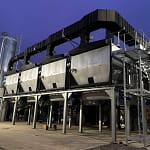
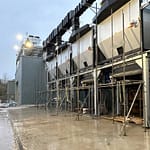
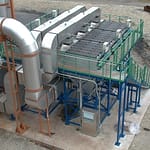
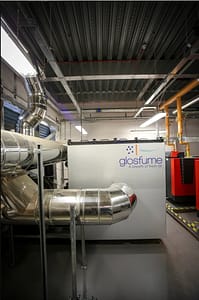
Glosfume installed a ceramic filtration system equipped with integrated dry scrubbing technology. The system efficiently captured over 99.99% of particulates, ensuring ultra-low emissions of PM10 and PM2.5, while the dry scrubbing feature neutralised acid gases like HCl and SO₂. The robust ceramic filters also withstood the facility’s high-temperature requirements, providing reliable, long-term operation without degradation.
Impact
The facility achieved full compliance with WID and IED regulations, reducing emissions to levels well below legal thresholds. The installation prevented the reformation of dioxins, ensuring safe and environmentally sound operations. Additionally, the durable, low-maintenance filtration system minimised downtime and operational costs, demonstrating Glosfume’s ability to deliver effective and sustainable incineration solutions.
Environmental and Economic Benefits of Glosfume’s Filtration Systems
Ensuring Regulatory Compliance
Glosfume’s technology enables waste incineration facilities to meet stringent environmental standards such as the IED and WID. Compliance with these regulations ensures the facility’s operational viability, reduces the risk of fines, and protects against reputational damage.
Improving Air Quality and Environmental Protection
By capturing fine particulates, neutralising acid gases, and preventing dioxin formation, Glosfume’s systems significantly improve air quality and minimise the release of harmful pollutants into the environment. These technologies align with broader public health objectives and contribute to environmental sustainability.
Operational Cost Efficiency
Glosfume’s ceramic filters are designed for long service life and minimal maintenance, reducing replacement costs and system downtime. The automated reverse-pulse cleaning system enhances efficiency and ensures consistent filtration performance, translating into significant cost savings for facilities.
Supporting Sustainability in Waste Management
Advanced filtration enables waste-to-energy facilities to operate sustainably by reducing emissions while generating clean energy. This aligns with circular economy principles, emphasising resource efficiency and environmental stewardship.
Conclusion: Advancing Emissions Compliance in Waste Incineration
Summary of Glosfume’s Filtration Benefits
Glosfume’s ceramic filtration technology offers a comprehensive solution for emissions control in waste and hazardous materials incineration. Its high-efficiency particulate capture, integrated acid gas scrubbing, and high-temperature durability ensure compliance with the most stringent environmental standards.
Supporting Sustainable Waste Management Practices
By enabling clean, compliant incineration operations, Glosfume supports the waste management industry’s transition towards sustainability. Advanced filtration systems protect air quality, reduce environmental impact, and contribute to the safe and efficient disposal of waste and hazardous materials.