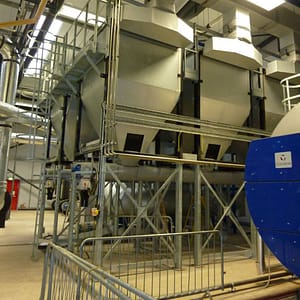




Effective hot gas filtration depends on one thing above all else: the quality of the ceramic filter element. In industrial environments where temperatures exceed 400°C and emissions contain acid gases and sub-micron particles, the filter element is the most critical component of any emissions control system. At Glosfume, we engineer ceramic elements to exacting standards—balancing thermal performance, filtration efficiency, and structural reliability under continuous load.
Why Standard Filters Fall Short
Many systems still rely on fabric or bag filters, which rapidly degrade when exposed to heat, chemical attack, or fine particles. Even ceramic filters from generic suppliers often lack consistency in density, form, or strength. In high-stakes applications like biomass combustion, nuclear waste incineration, or lead smelting, these inconsistencies lead to pressure instability, shortened lifespan, and compliance failure.
Glosfume addresses these challenges by designing and manufacturing our own ceramic filter elements in-house, ensuring full control from fibre blend to finished product. This commitment to precision gives our customers unmatched filtration performance and system reliability.
The Building Blocks: Materials Matter
Each Glosfume ceramic filter begins with carefully selected fibres—engineered to resist heat, corrosion, and physical stress. We offer three main element types:
- G3 – Ceramic fibre-based, suitable for temperatures up to 1100°C
- G4 – Mineral fibre-based, rated up to 750°C
- S4 – Made from Low Bio-Persistent Fibres (LBPFs), also rated to 1100°C with reduced occupational risk
These fibre combinations are chosen based on the chemical environment, operating temperature, and expected cleaning cycles. All are blended in-house under controlled conditions to ensure consistency in every batch.
Optimising Geometry for Performance
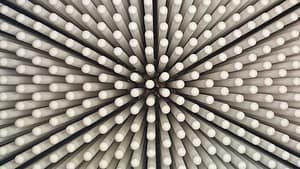
Filter element geometry plays a key role in filtration efficiency and operational stability. Glosfume elements are typically 1000 mm long with a 60 mm outer diameter tapering to 55 mm. This profile is not arbitrary—it’s been tested and refined for optimal pressure drop, surface area, and cleaning flow dynamics.
A consistent outer shape ensures the filter cake forms evenly across the surface, which is critical for both capture efficiency and efficient cleaning via reverse pulse. The internal bore is also carefully engineered to minimise turbulence and support smooth airflow to the outlet manifold.
Consistency Through Precision Vacuum Forming
Glosfume uses a computer-controlled vacuum forming system to produce each element. This method guarantees uniform wall thickness, symmetrical shape, and consistent fibre compaction. It also enables us to tightly control the element’s pressure drop characteristics, ensuring the filters behave predictably under varying flow rates and load conditions.
By avoiding manual forming or batch variation, we reduce the likelihood of weak spots or inconsistent cleaning. This manufacturing discipline is one of the reasons Glosfume elements can operate reliably for years under extreme thermal and chemical stress.
Thermal and Chemical Resilience by Design
Our elements are designed to survive the most demanding environments. G3 and S4 elements can withstand temperatures up to 1100°C without degradation. All Glosfume filters are resistant to both acidic and alkaline gases—above and below dew point—making them suitable for processes involving HCl, SO2, HF, and other aggressive compounds.
The sintering profile of each element is carefully controlled to ensure structural strength without compromising porosity. This means filters retain their performance even during thermal cycling or prolonged exposure to dioxin-laden combustion gases.
Surface Finishing and Sub-Micron Capture
In many industrial processes, the most harmful emissions are not visible to the eye. PM10, PM2.5, and even nano-particles can pass through traditional filters. Glosfume addresses this by applying a micro-porous coating to selected filter elements. This surface finish increases fine particle capture without adding excessive pressure drop.
In independent trials, our ceramic filters have demonstrated capture efficiencies of 99.99%—achieving outlet emissions below 1 mg/m³, and in some cases down to 0.0017 mg/m³. This makes our filters ideal for applications with strict PM and dioxin emission limits.
Reverse Pulse Compatibility and Longevity
Each Glosfume element is designed to work in conjunction with our engineered reverse pulse cleaning systems. The mechanical strength of the ceramic body ensures the element withstands repeated air pulses without cracking or fatigue. Uniform density and internal structure also help ensure that the dislodged filter cake falls away cleanly, maintaining performance over time.
In normal operation, our elements routinely last several years before needing replacement—significantly outlasting fabric alternatives. When replacements are needed, stock is available from our UK facility for immediate dispatch.
Built-In Traceability and Quality Assurance
Every element Glosfume produces is barcoded and batch-traceable. During production, 10% of all elements are tested daily for pressure drop, dimensional accuracy, and strength. This data is logged into our quality control system, ensuring that filters meet consistent technical specifications across every order.
This level of traceability is especially valuable in applications involving hazardous materials, regulated combustion, or customer audits. It gives engineers and environmental officers full confidence in the provenance and performance of every filter element installed.
Behind every Glosfume filtration system is a ceramic element built with purpose and precision. From the fibre formulation to the final sinter, every step is engineered to meet the demands of high-temperature emissions control. These are not generic filters—they are application-specific components designed to deliver performance, reliability, and regulatory compliance for years to come.
If you’re specifying a new filtration system or looking to upgrade the performance of an existing one, contact Glosfume to discuss our ceramic element specifications and how they can support your operational goals.