
Glosfume Site Loader
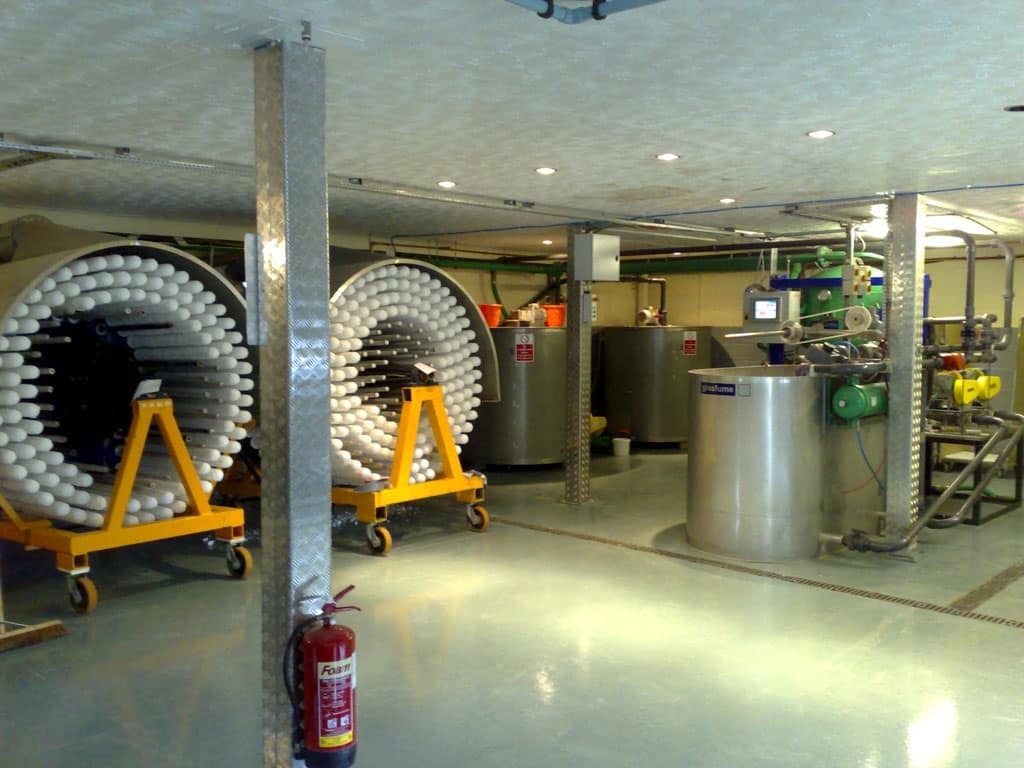
Glosfume catalyst elements

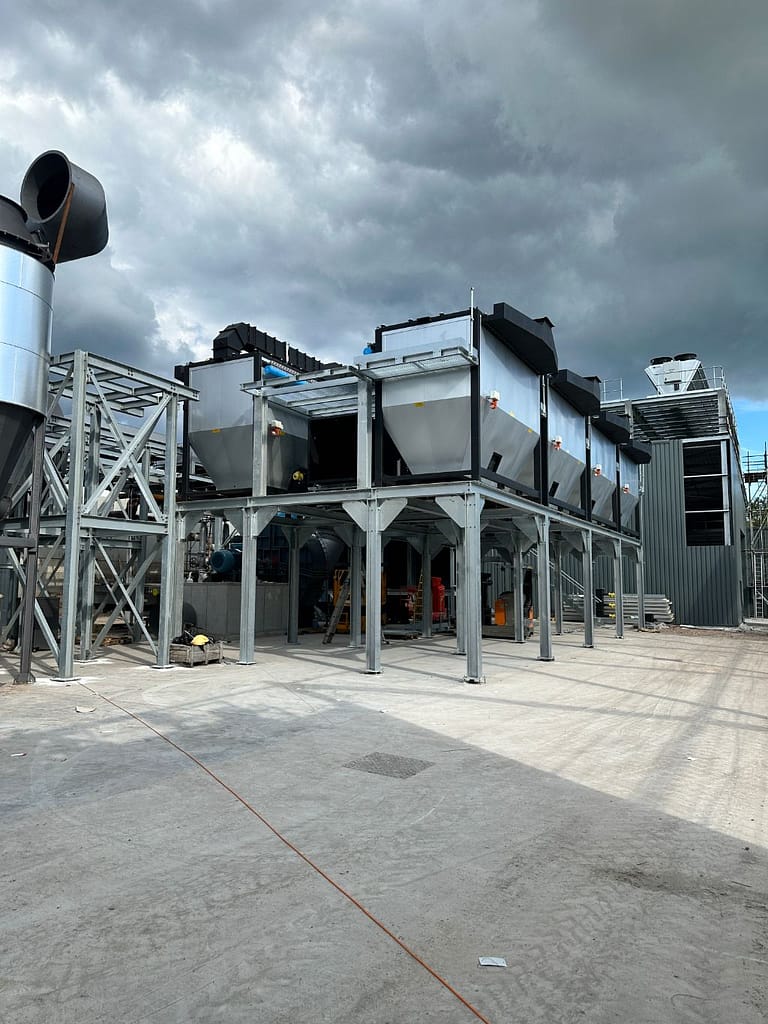
Glosfume Ceramic catalyst filters are exceptionally compact allowing them to be utilised in the most restricted of sites.

The Glosfume Catalytic filter element is based on a ceramic fiber impregnated with a bespoke catalytic solution. The chemical composition is made to suit the specific needs of customers operations. A combination of dust, NOx and dioxins, can be removed in one single process. The catalyst is applied evenly within the structure of the ceramic element providing the lowest cost of compliance.

In addition to their multi-compound capabilities, our catalyst filters are effective at temperatures as low as 180°C and as high as 650°C. Combining, these advantages can help reduce capital expenditures by up to 40% compared to alternative solutions whilst minimising the systems footprint.

These elements are designed for industrial operators and engineers requiring reliable high-temperature emission control in demanding processes. They help protect downstream equipment while reducing particulate and catalyst loss, supporting consistent plant performance.

Catalyst Elements Glosfume Gloucester

Where catalyst elements fit in a filtration system

Catalyst filtration elements sit within the hot gas filtration stage, positioned after the primary process and before discharge or any downstream equipment. This placement allows them to capture particulates and treat gaseous pollutants in a single step, helping protect downstream catalysts and equipment from fouling while supporting overall emissions control.

They are suited to high-temperature industrial processes, operating effectively between 180°C and 650°C, with ceramic filtration technology capable of withstanding temperatures up to 1000°C. This enables installation directly in the process stream without the need for cooling, maintaining efficiency and continuity.

The ceramic fiber structure, impregnated with a bespoke catalytic material, enables combined filtration and reaction. As gases pass through the element, particulates are retained while the embedded catalyst promotes the breakdown of targeted pollutants.

Designed for industrial processes where temperature and chemical conditions make conventional media impractical, these elements help maintain process continuity by reducing downstream fouling and contamination risk.

How it works

Collection

Within our catalytic filters, the micro-porous elements hang vertically from a header plate. The header plate separates the filter’s clean and dirty compartments. Hot gas is drawn through the filter medium from the outside to the inside. The sub-micron particles are collected on the outer surface, gases then pass through the element contacting the catalyst solution. This increases the rate of reaction removing the harmful gases.

Removal

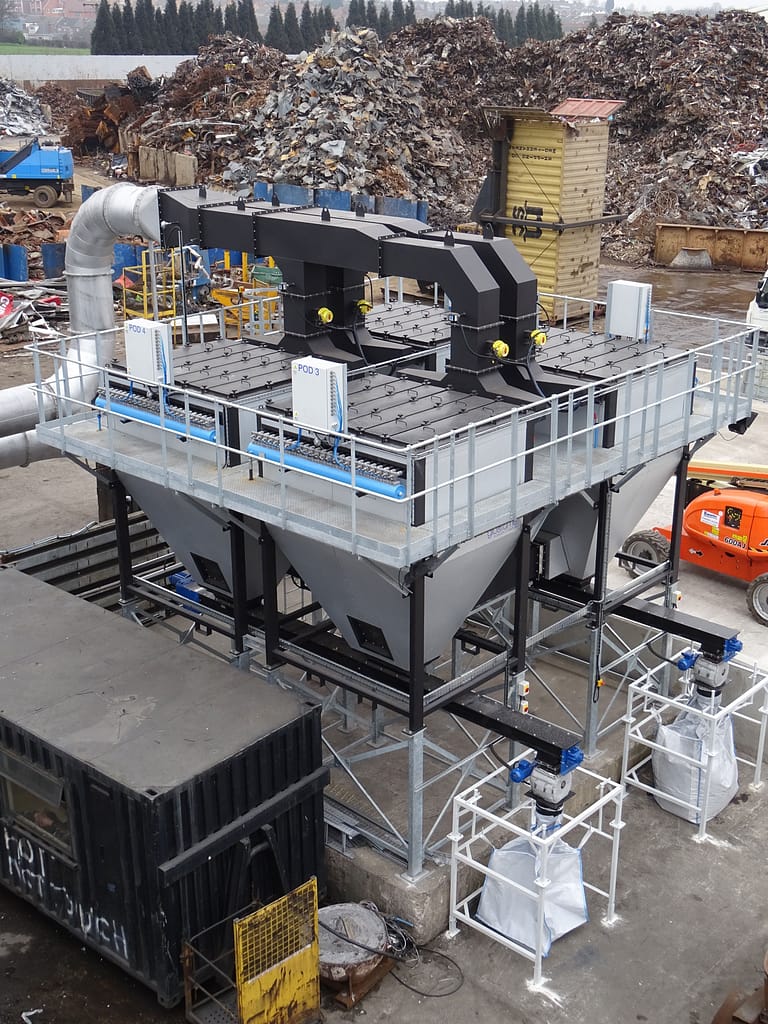
The sub-micron particles are removed from the element by a powerful, reverse jet pulse. The particles are then discharged through the hopper outlet or directly to a tray for collection and disposal. To improve efficiency and longevity, the filter body is insulated and trace heating options are available.

Process overview

In operation, hot process gas enters the filtration unit and is directed across the ceramic elements. As the stream passes through the ceramic fiber and embedded catalytic material, particulates are captured and targeted gases begin to react. The treated gas then exits the system, while collected material remains on the element surface. At set intervals, reverse-jet cleaning restores performance and prepares the system for continued operation.

Both powerful and compact, our filters are globally recognised for their defining features. Discover how Glosfume is leading the charge for filtration in metal working and the mining industry

Our high-temperature ceramic catalyst filters have proven time and time again the efficiency, reliability and power of Glosfume engineering

With a product like catalyst filters, the proof is in the performance. For over 20 years, Glosfume has supplied high-efficiency filters to clients across the globe and has received countless recommendations and case studies in the process.

Thanks to our in house manufacturing, our elements are capable of withstanding temperatures as high as 1000°C, making them efficient at removing sub-micron inert particles from a variety of gaseous emissions. Our filters are frequently employed in foundries, product recovery, incineration (compliant with IED), biomass wood fired boilers, renewable energy, acid recovery, production of nanomaterials and gasification.

Key features

Both powerful and compact, our filters are globally recognised for their defining features. Discover how Glosfume is leading the charge for 99.99% efficiency catalytic filters.

Density & Strength

Includes elements that are stronger than any other low-density ceramic filter elements.

Micro Porous Finish

Micro-porous finish removes particles as small as a nanogram, to filter toxic and harmful materials like PM10 and PM2.5

Resilience

Filters increase in strength when subjected to high temperatures and feature a reinforced neck.

Consistent Performance

Accurate machining of wall thickness for consistent filtration with continuity in density for better performance.

Customisable

Multiple different sizes, shapes and materials are available depending on your requirements.

Parts & Labour Guarantee

On top of our 99.99% efficiency, we offer two years parts and labour guarantee for new catalyst filter installations.

Quality Controlled

Glosfume manufacture 100,000 elements a year at a factory in the UK, allowing us to maintain strict quality control.

Future Proof Filters

Typical particulate emission levels meet both current and future requirements of the Renewable Heat Incentive (RHI).

Dry Scrubbing Process

Our additional dry scrubbing process removes acid gas and dioxins from the gas stream.

Applications

Choosing the right element

Selection & specification

Selecting the correct catalyst filtration element requires a clear understanding of process conditions and operational priorities. Each installation is typically configured to suit the specific gas stream, ensuring reliable performance and long service life.

Process temperature profile

Elements should be selected based on continuous and peak operating temperatures. Glosfume catalyst elements operate effectively between 180°C and 650°C, with ceramic filtration technology capable of withstanding temperatures up to 1000°C, allowing integration without excessive cooling.

Dust and particulate characteristics

The nature of the particulate load is critical, particularly where fine or sub-micron particles are present. Consideration should be given to whether dust is free-flowing or prone to sticking, as this influences filtration behavior and cleaning efficiency.

Chemical environment

Gas composition, including the presence of acidic or reactive compounds, should be assessed to ensure compatibility with both the ceramic structure and the catalytic material. The catalyst formulation can be tailored to suit specific process requirements.

Installation constraints

Available space, access for maintenance, and whether the system is a retrofit or new installation will influence element selection. Compact element design allows use in restricted sites and can simplify integration into existing plant layouts.

Maintenance expectations

Operational factors such as cleaning frequency, access for inspection, and dust removal methods should be considered. Reverse-jet pulse cleaning supports consistent performance, but system design should ensure ease of servicing and minimal disruption to operations.

Selection Framework

Sizes, shapes & materials

Glosfume catalyst filtration elements are available in a range of sizes, shapes, and material options, with selection driven by the specific requirements of each process. In practice, this is determined by operating conditions, system design, and maintenance strategy, ensuring the element integrates effectively within the overall filtration unit.

What drives selection?

Each element is specified based on the demands of the process, plant layout, and servicing approach.

Process temperature profile

Continuous and peak temperatures influence material choice, particularly where operation spans from 180°C to 650°C or extends toward higher-temperature ceramic capabilities.

Dust loading and particulate characteristics

Fine or sub-micron particles, as well as sticky or abrasive dusts, affect element geometry and surface behavior, influencing filtration efficiency and cleaning performance.

Chemical environment

The presence of acidic or reactive compounds informs both material selection and catalyst formulation, ensuring durability and compatibility.

Pressure drop constraints

System design requirements, including allowable pressure loss across the filter, guide element size, porosity, and overall configuration.

Installation constraints

Available space, existing housing geometry, and whether the project is a retrofit or new installation all influence the choice of element dimensions and form.

Maintenance approach

Access for inspection, cleaning frequency, and dust handling methods determine the most suitable element design for long-term operation.

FAQ

A catalyst filtration element combines particulate filtration and catalytic treatment within a single ceramic structure, designed for high-temperature industrial gas streams. In contrast, a catalytic converter is typically used in automotive applications and focuses on gas-phase reactions without providing particulate filtration.
A catalyst filter generally refers to the complete filtration system, including the housing, controls, and multiple elements. A catalyst filtration element is the individual component where filtration and catalytic activity take place within that system.
Service life depends on operating conditions such as temperature, dust loading, and chemical environment. Under stable conditions, elements can operate for extended service periods, with maintenance typically focused on inspection and ensuring effective cleaning cycles. Replacement intervals are therefore application-specific.
Glosfume elements are manufactured in-house using engineered ceramic fiber and are impregnated with a catalytic material tailored to each application. This ensures consistent quality, compatibility with process conditions, and the ability to combine filtration and catalytic treatment within a compact design.
Yes. By combining particulate removal and catalytic treatment within a single stage, these elements can reduce the need for additional downstream equipment. This can lower overall system complexity, reduce installation footprint, and decrease capital expenditure.

Talk to us about catalytic elements

Glosfume offers self-cleaning, high-efficiency catalyst filters that can withstand up to 1000°C of heat. We have installed over 2,000 filters in more than 40 countries over the last 2 decades, a feat that has positioned Glosfume as a UK market leader.

We pride ourselves on our cost-effective pricing, thanks to our in-house approach to designing and manufacturing. With Glosfume, you will receive high-quality ceramic filters at a competitive price.

Our award-winning hot gas filtration systems can be also tailored to the unique specifications of your application, so get in touch to discuss your requirements using the contact form.

Talk to us now

+44 (0)1242 609 111

Pick up the phone and speak to one of the specialist Glosfume team today.

WhatsApp

Time not on your side? Message us on WhatsApp and we’ll get back to you.

Name(Required)