The Demand for Advanced Emissions Control
In an era of increasing environmental awareness, industries face growing pressure to reduce emissions and adhere to strict environmental standards. Regulatory frameworks such as the Industrial Emissions Directive (IED) and Waste Incineration Directive (WID) demand that facilities significantly lower particulate and acid gas emissions to protect public health and the environment.
However, many traditional emissions control systems struggle to meet these stringent requirements, leading to operational inefficiencies, non-compliance penalties, and environmental risks. Industries such as energy-from-waste (EfW), metals and mining, and hazardous waste incineration face unique challenges due to their high-temperature processes and complex emissions profiles.
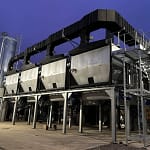
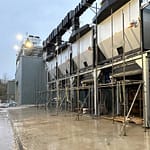
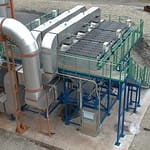
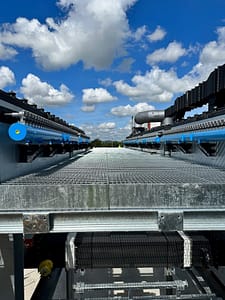
Glosfume’s integrated ceramic filtration and dry scrubbing systems provide a comprehensive solution to these challenges. Combining advanced particulate capture with effective acid gas neutralisation, these systems deliver unparalleled performance in emissions control, ensuring compliance while optimising operational efficiency.
Key Emissions Challenges in Industrial Applications
Particulate Emissions (PM10 and PM2.5)
High-temperature industrial processes generate significant levels of fine particulate matter. Particles smaller than 10 microns (PM10) and 2.5 microns (PM2.5) are particularly harmful as they penetrate deep into the respiratory system, contributing to health risks and environmental pollution.
Traditional filters often fail to capture sub-micron particles effectively, resulting in emissions that exceed regulatory thresholds.
Acid Gases (HCl, SO₂, HF)
Acid gases such as hydrogen chloride (HCl), sulphur dioxide (SO₂), and hydrofluoric acid (HF) are common by-products of combustion processes involving chlorinated or sulphur-rich materials. These corrosive emissions pose risks to both equipment and the environment. Left untreated, they lead to equipment degradation and regulatory non-compliance.
Dioxins and Furans
Dioxins and furans, by-products of incomplete combustion, are highly toxic pollutants that persist in the environment and accumulate in food chains. Controlling the conditions that lead to their formation is critical to preventing these harmful compounds from entering the atmosphere.
The Technology Behind Integrated Filtration and Dry Scrubbing Systems
High-Efficiency Ceramic Filtration
Glosfume’s ceramic filters are engineered to capture 99.99% of particulates, including PM10 and PM2.5. The micro-porous structure of the ceramic elements ensures sub-micron particulate capture without compromising airflow. These filters are highly durable, withstanding operating temperatures up to 1000°C, making them ideal for high-temperature industrial environments.
Dry Scrubbing for Acid Gas Neutralisation
Dry scrubbing systems work by injecting sorbents, such as sodium bicarbonate or lime, into the gas stream. These react with acid gases like HCl, HF, and SO₂ to form neutral salts that are easily captured by ceramic filters.
This process operates effectively over a wide temperature range (140°C–450°C), making it adaptable to diverse industrial applications.
Integration for Seamless Operation
Combining ceramic filtration and dry scrubbing into a single integrated system streamlines emissions control. This reduces operational complexity, improves efficiency, and minimises the footprint of emissions control systems within industrial facilities.
Advantages of Glosfume’s Integrated Systems
Comprehensive Emissions Control
Capture both fine particulates and acid gases simultaneously, ensuring emissions remain well below regulatory limits. Prevent the reformation of harmful compounds, such as dioxins, by maintaining optimal temperature conditions and neutralising precursors during filtration.
Durability and Longevity
The robust construction of Glosfume’s ceramic filters resists damage from abrasive particulates, thermal shock, and corrosive emissions. Extended filter lifespan reduces maintenance requirements and replacement costs, improving overall operational efficiency.
Energy Efficiency
Glosfume’s systems maintain a low-pressure drop, ensuring consistent airflow and reducing energy consumption. This translates into significant cost savings over time.
Industry Adaptability
- Energy-from-Waste: Captures emissions while supporting renewable energy generation.
- Metals and Mining: Handles abrasive particulates and corrosive gases, ensuring safe and efficient operations.
- Hazardous Waste Incineration: Manages complex and variable emissions profiles, ensuring environmental compliance.
Case Study: Transforming Emissions Control in an Energy-from-Waste Facility
The Challenge
An energy-from-waste facility struggled to meet emissions standards due to outdated filtration technology. High levels of fine particulates (PM10 and PM2.5) and acid gases (HCl and SO₂) exceeded regulatory thresholds, while frequent maintenance and downtime disrupted operations.
The Solution
Glosfume implemented an integrated ceramic filtration and dry scrubbing system tailored to the facility’s needs. The system provided high-efficiency particulate capture and effective acid gas neutralisation, enabling the plant to achieve emissions compliance.
The Impact
- Improved Emissions Control: Achieved 99.99% capture of fine particulates, reducing PM10 and PM2.5 emissions to below legal limits.
- Acid Gas Neutralisation: Neutralised over 95% of acid gases, including HCl and SO₂, ensuring full compliance with the IED.
- Operational Efficiency: Reduced maintenance frequency and minimised downtime, allowing the facility to operate continuously with lower costs.
The Future of Integrated Emissions Control
Adapting to Stricter Regulations
Glosfume’s systems are designed to meet current emissions standards and adapt to stricter environmental regulations in the future.
Scalability for Industrial Growth
The modular design of Glosfume’s filtration systems allows facilities to expand capacity as operational demands grow, providing long-term flexibility.
Supporting Sustainability Initiatives
By significantly reducing air pollution and enabling compliance with emissions regulations, integrated systems play a critical role in global sustainability efforts. Industries adopting advanced emissions control technologies contribute to cleaner air, healthier communities, and reduced environmental impact.
Conclusion: Redefining Emissions Control with Glosfume
Glosfume’s integrated ceramic filtration and dry scrubbing systems offer industries a cutting-edge solution for emissions control. By combining high-efficiency particulate capture with effective acid gas neutralisation, these systems enable facilities to meet stringent regulatory standards while improving operational efficiency and reducing costs.
As industries face mounting pressure to operate sustainably and comply with evolving regulations, Glosfume’s technology ensures they remain ahead of the curve. By investing in advanced emissions control, facilities can achieve compliance, optimise operations, and contribute to a cleaner, more sustainable future.